The Letter That Had to Travel a Thousand Miles Before She Could Say Yes
Imagine proposing marriage and then waiting three weeks to find out the answer.
Not because she needed time to think. Not because you were playing it cool. But because she was in Ohio and you were in California, and the letter you sent — carefully written, probably rewritten twice — had to travel by post, arrive at her family's house, be read in private, considered seriously, and then answered in a reply that had to make the same journey in reverse.
Three weeks of not knowing. Three weeks of going to work, eating dinner, trying to sleep, with the most important question of your life hanging completely unresolved in the physical distance between two places.
This wasn't an unusual situation in nineteenth and early twentieth century America. It was simply how major life moments worked when the people involved happened to be apart.
When Distance Was Measured in Days, Not Miles
For most of American history, communication across significant distances meant accepting a delay that modern life has made genuinely difficult to conceptualize. A letter sent from New York to San Francisco in 1860 traveled by Pony Express in about ten days — and that was considered a remarkable achievement of speed and logistics. Before the transcontinental railroad, overland mail could take three weeks or more. And even after rail service expanded, a letter from the East Coast to a rural address in the Midwest might take five to seven days each way.
This meant that any exchange of information — any conversation that couldn't happen in person — was broken into discrete episodes separated by silence. You wrote. You sent. You waited. You received. You responded. The rhythm of correspondence was slow, deliberate, and fundamentally different from anything we experience today.
For ordinary communication — catching up with a cousin, confirming a business arrangement, sharing neighborhood news — this delay was manageable, even comfortable. People built their social lives around it. Letters were written with care precisely because they had to carry weight. A single page might cover everything worth saying for the next two weeks.
But for urgent moments — the kind where time actually mattered, where every day of uncertainty was its own small ordeal — the slowness of the mail was not comfortable at all.
The Telegram and the Weight of Yellow Paper
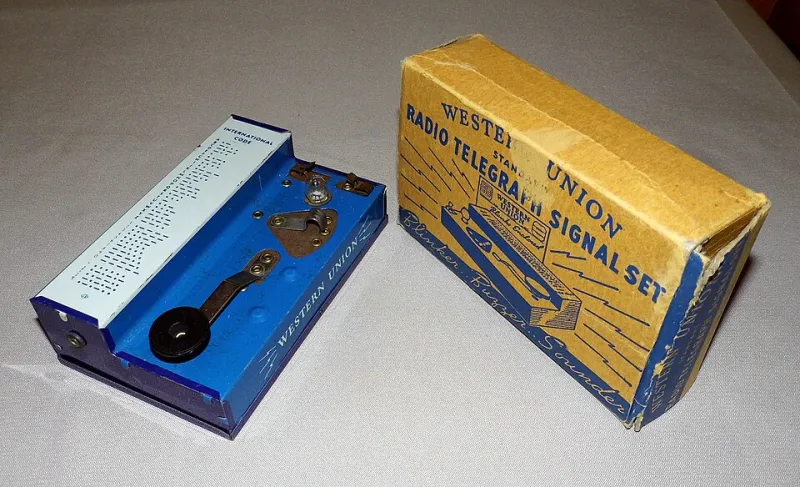
The telegraph changed the speed of long-distance communication dramatically, and by the late 1800s, sending a telegram had become the standard way to transmit genuinely urgent news. A telegram could cross the country in hours. It was fast, direct, and unambiguous.
It was also expensive, emotionally loaded, and terrifying to receive.
Because telegrams cost money by the word, they were stripped down to their essential meaning. The formalities that softened hard news in a letter — the expressions of sympathy, the gentle lead-up, the careful framing — simply didn't survive the economics of the telegram. What arrived was the bare fact. A birth. A death. A proposal. An acceptance. A rejection.
Families who received unexpected telegrams in the late nineteenth and early twentieth centuries often described a moment of dread before opening them, because telegrams usually meant something significant had happened. During wartime, the sight of a Western Union messenger on your street could stop your heart before he even reached your door.
A marriage proposal sent by telegram — and many were — arrived as something like a command performance of emotion compressed into a dozen words. ARRIVING FRIDAY STOP WISH TO SPEAK TO YOUR FATHER STOP HOPE YOU WILL SAY YES STOP. The formality of the format forced a directness that letters could avoid. There was no room for ambiguity. No space for elaborate qualification.
Proposals That Crossed Continents and Seasons
For Americans separated by immigration, military service, or the simple economic reality of taking work wherever it existed, proposals and major life decisions sometimes unfolded across months of correspondence rather than a single conversation.
A man working the railroad camps of the West might conduct an entire courtship by mail with a woman back in Pennsylvania — exchanging letters every two or three weeks, building a relationship through carefully chosen words and the patient accumulation of detail. By the time he proposed, they might not have seen each other in a year. By the time she accepted and he returned home, another season might have passed.
The emotional texture of this experience was genuinely different from anything modern couples navigate. The uncertainty was real and prolonged. The commitment required to maintain a relationship across that kind of distance and delay — without voice, without image, without any real-time feedback — demanded a quality of deliberate intention that instant communication has largely made unnecessary.
When soldiers wrote home from the trenches of World War I or the Pacific theater of World War II, their letters often contained proposals, or responses to proposals made before deployment, or expressions of love that had to carry the full weight of everything that might remain unsaid if the next battle went badly. The letters that survive from those years are often extraordinary in their emotional precision — not because those men were naturally more eloquent than men today, but because they understood that words on paper might be the last words they sent.
What Instant Communication Actually Changed
Today, a long-distance proposal typically involves FaceTime or a carefully staged video call, with the ability to replay the moment, screenshot it, share it immediately, and receive reactions from friends and family in real time within minutes. The answer arrives instantly. The uncertainty lasts seconds, not weeks.
This is, in almost every practical sense, better. The anxiety of waiting weeks for an answer to the most vulnerable question you've ever asked is not a romantic feature. It is simply a limitation that technology has removed, and good riddance.
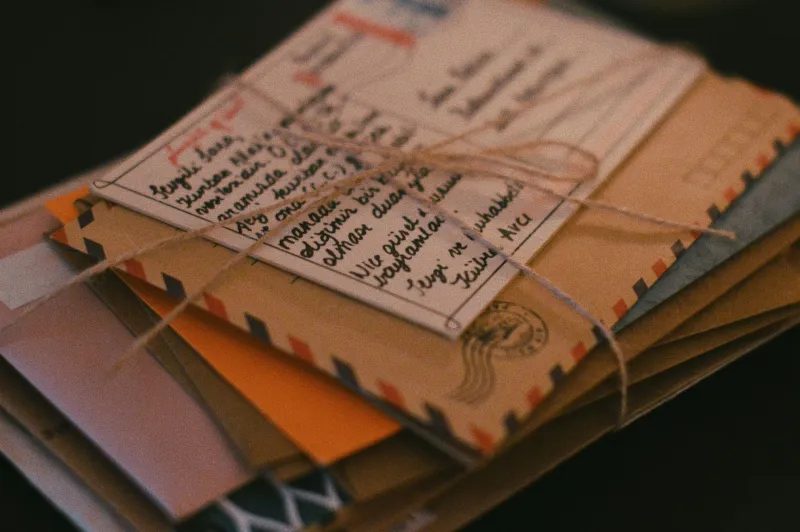
But the old world of slow correspondence did produce something that's harder to replicate in the age of instant messaging: letters that people kept for the rest of their lives. Physical objects that carried the specific weight of a specific moment — the handwriting, the paper, the postmark, the fold marks from being read and reread and carried in a pocket.
Somewhere in attics across America, those letters still exist. Proposals and acceptances. Birth announcements that arrived weeks after the baby came home. Telegrams folded into envelopes and kept in shoeboxes.
They traveled a long way to get there. And the people who received them never forgot the waiting.