The Day the Whole Town Stopped for the Circus Train
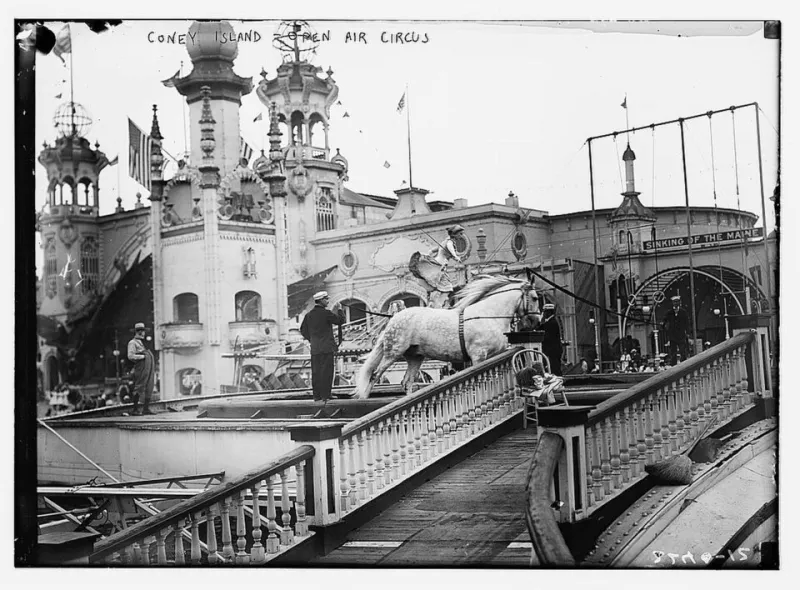
Photo: The Library of Congress, No restrictions, via Wikimedia Commons
The train arrived before dawn. That was part of the magic — by the time most people woke up, the circus was already there, already becoming real on the edge of town. Kids who'd stayed up listening for the whistle would drag their parents to the lot before breakfast, just to watch the elephants help raise the canvas. By mid-morning, the whole town knew. By afternoon, the whole town showed up.
For one day, nothing else mattered.
A World Without Alternatives
To understand what the circus meant to ordinary Americans in the late 1800s and well into the twentieth century, you have to understand what it was competing against. The answer, for most of that period, was almost nothing.
In rural America especially, the entertainment calendar was sparse by any modern measure. There might be a county fair in late summer, a church social, a traveling medicine show if you were lucky. Newspapers brought news from the outside world, but they couldn't bring the outside world itself. Radio arrived in the 1920s and changed things considerably. But radio was sound. The circus was something else entirely — it was spectacle you could smell, feel, and stand inches away from.
Ringling Bros. and Barnum & Bailey, at the height of its operation, traveled with more than a thousand employees, dozens of exotic animals, and equipment that filled a hundred rail cars. When that train pulled into a small American town — and it pulled into hundreds of them every season — it represented the single largest gathering of extraordinary things that most residents would ever witness in person.
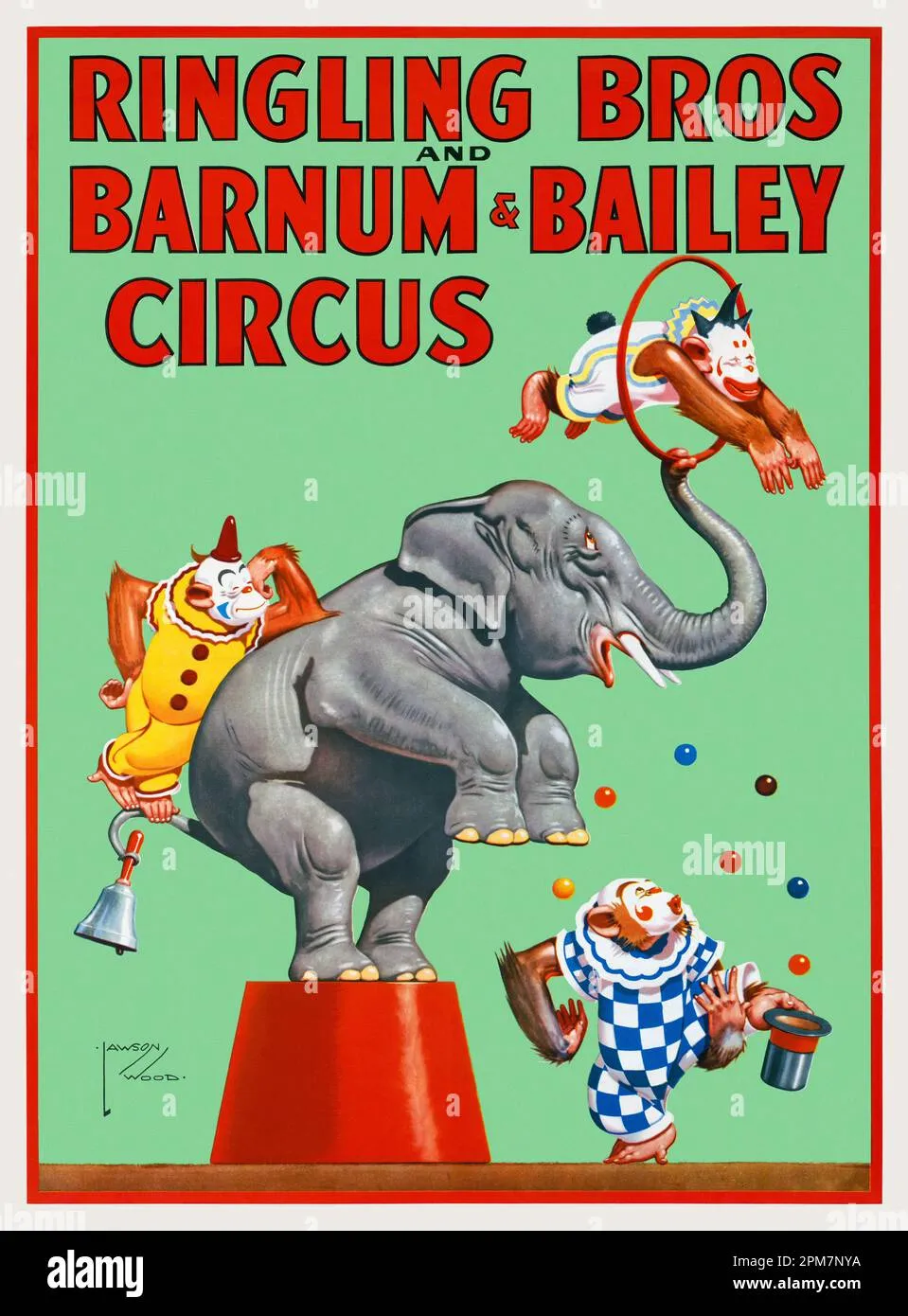 Photo: Ringling Bros. and Barnum & Bailey, via c8.alamy.com
The farmers came. The factory workers came. The schoolteachers and the shop owners and the children and the grandparents, all of them, came. Not because they'd chosen it from a menu of options, but because there was no other choice — and because, even if there had been, they'd have chosen this.
The Ritual Before the Show
Circus day wasn't just the performance. It was the whole experience, from early morning to late at night, and the town transformed to accommodate it.
The morning parade was a tradition unto itself. Gilded wagons rolled through downtown streets. Brass bands played. Elephants walked in single file past the hardware store and the five-and-dime. People lined the sidewalks two and three deep, and the children in front pressed against a rope barrier, close enough to feel the heat radiating off the animals.
This was free. The parade cost nothing, and it was given freely, because it was advertising — the circus needed the town as much as the town needed the circus. That transaction, that mutual dependency, created something that felt genuinely communal rather than commercial.
By the time the big top opened, the anticipation had been building for hours. People took their seats on wooden bleachers, ate peanuts from paper bags, and watched three rings simultaneously fill with acrobats, clowns, and feats of daring that no one in that tent had ever seen before and might never see again.
Everyone in the Same Room
Here's the thing about the circus that's easy to overlook from a distance: it was one of the very few entertainment experiences in American history that genuinely crossed every social line.
The banker and the sharecropper sat under the same canvas. The mayor's family and the mill worker's kids watched the same trapeze artist. There was no premium tier, no VIP section that saw a fundamentally different show. The ringmaster's voice carried to every seat. The gasp when the aerialist released the bar was simultaneous, collective, shared by every single person in that tent at exactly the same instant.
That kind of shared experience — where an entire community encounters the same moment of wonder at the same time — is genuinely difficult to replicate in the modern world. We talk about cultural moments, about shows everyone is watching or events everyone is following. But even the most-watched television event in recent history is experienced individually, in separate rooms, on separate screens, at slightly different times. The collective gasp doesn't happen. The shared silence before the leap doesn't happen.
When the Big Top Came Down
The decline of the traveling circus tracked almost perfectly with the rise of television. Once a family could sit in their living room and watch trained animals, acrobatic performers, and variety acts from around the world — for free, every night — the once-a-year miracle of the circus lost some of its power.
The economics shifted too. Transporting hundreds of animals and a thousand employees by rail became enormously expensive. Animal welfare standards, which evolved significantly through the latter half of the twentieth century, added both cost and controversy. Ringling Bros. retired its elephant acts in 2016 after years of pressure, and closed entirely in 2017, ending a 146-year run.
Smaller circuses still tour. A reimagined Ringling has returned in a limited form. Cirque du Soleil offers something genuinely spectacular to audiences in major cities. But the experience of an entire small town gathering in a field on the edge of town — everyone, from every walk of life, sharing the same two hours of astonishment — that's not something any streaming service has figured out how to deliver.
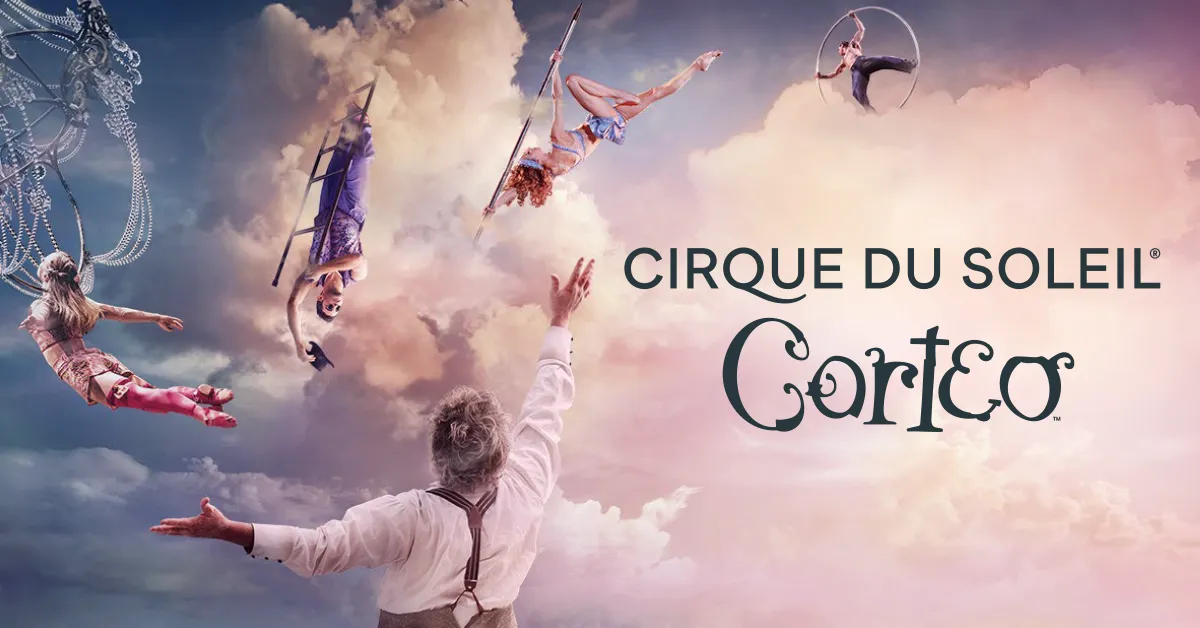 Photo: Cirque du Soleil, via www.eventim.de
What It Meant to Share Something
There's a version of modern entertainment that is objectively better than anything the circus offered. The special effects are incomparably more sophisticated. The safety standards are higher. The content is more diverse, more accessible, and available on demand at any hour from any location on earth.
And yet something specific has been lost — not the circus itself, but the thing the circus represented. The idea that an entire community could be pulled into the same experience, at the same moment, by the same sense of wonder. That the farmer and the banker and the schoolkid could all gasp at once, and feel, for a few hours, like they belonged to the same place and the same story.
That's not a small thing to have given up. We just gave it up so gradually that most of us didn't notice it leaving.