The Host Who Knew Your Name: When Getting a Restaurant Table Was a Relationship, Not a Transaction
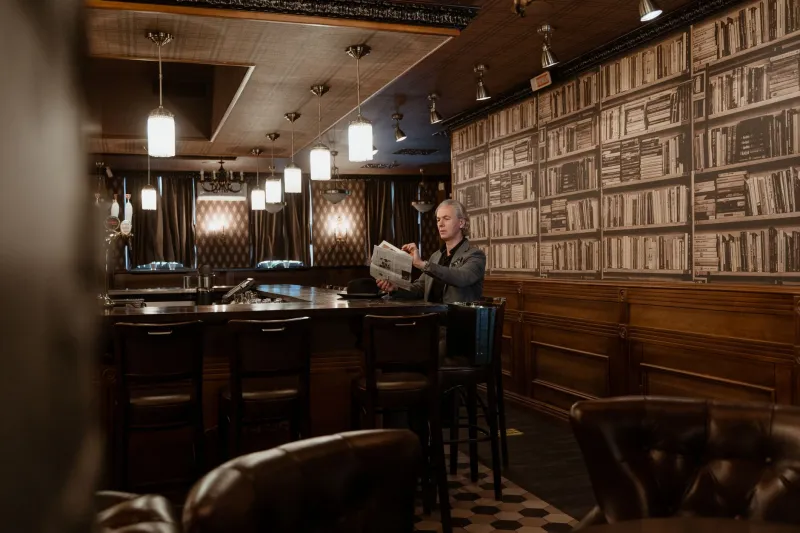
Not long ago, getting a table at a good restaurant was a genuinely personal experience. You called the number. Someone picked up — usually the host or the maître d', someone who had worked there long enough to know the regulars by name. You gave your name, said you wanted Saturday at seven, maybe mentioned it was an anniversary. They wrote it down in a book. You showed up Saturday at seven and were greeted like a person, not a booking reference.
That world still exists in a handful of places. But for most Americans eating out in 2024, the experience of securing a restaurant reservation has become something else entirely — more efficient in theory, more frustrating in practice, and strangely impersonal in ways that are hard to articulate but easy to feel.
The Book Behind the Host Stand
The handwritten reservation book was a surprisingly sophisticated piece of technology for its time. A good host or maître d' could glance at that book and reconstruct an entire evening's worth of social information. This couple comes every Friday. That party always runs long. This gentleman tips generously and prefers a corner table. She's a food critic — don't let on that you know.
None of this was written down explicitly. It lived in the institutional memory of the staff, passed along through shifts and seasons, accumulated over years of face-to-face interaction. A restaurant that had been open for a decade had a decade's worth of relationship data stored entirely in the heads of the people who worked there.
Walk-ins were handled with similar fluency. A busy Friday night at a popular restaurant in, say, Chicago or New Orleans in the 1970s meant a genuine negotiation at the door. The host would assess the room, consult the book, make eye contact with the waiter, and either seat you immediately, ask you to wait at the bar, or tell you honestly that tonight wasn't possible. The whole transaction took two minutes and left you with a clear answer.
There was also something socially interesting about the waitlist. You gave your name and you waited — at the bar, on a bench outside, occasionally on the sidewalk. You talked to the other people waiting. You eavesdropped on the host's negotiations. You became, briefly, part of the restaurant's living social ecosystem rather than a data point in a queue.
When Silicon Valley Discovered Dinner
The digitization of restaurant reservations seemed, at first, like an obvious improvement. OpenTable launched in 1998 and slowly built a network that made it possible to browse availability across multiple restaurants, book instantly, and receive confirmation without ever speaking to a human being. For busy people who hated making phone calls, it was genuinely liberating.
But the technology brought its own complications, and they've multiplied over time.
No-show rates — always a problem for restaurants — became severe enough that the industry had to respond. Today, many popular restaurants require a credit card to hold a reservation and charge fees ranging from $25 to $100 per person if you cancel within a certain window or simply don't appear. What was once a social contract enforced by nothing more than basic courtesy is now a financial instrument.
The reservation window itself has become a source of stress that simply didn't exist before. At high-demand restaurants, tables become available on specific platforms at specific times — often weeks in advance, often in the middle of a Tuesday morning. Miss the window and you're shut out. This has spawned an entire secondary market of reservation scalpers who book tables at coveted restaurants and resell them through apps like Appointment Trader and Resy resale groups. You can now pay hundreds of dollars for the right to sit at a particular table and spend your own money on dinner.
The irony is that all of this friction is supposed to represent progress. The apps promised convenience. What many diners actually experience is a new kind of anxiety — the low-grade stress of managing a calendar of restaurant bookings the way you'd manage a travel itinerary, complete with confirmation emails, reminder texts, and cancellation deadlines.
What the Maître D' Knew That the Algorithm Doesn't
The deeper loss isn't logistical — it's relational. The maître d' with institutional memory wasn't just efficient; he was a human being who had accumulated genuine knowledge about the people he served. He knew who needed a quiet table for a difficult conversation. He knew which couple was celebrating something they hadn't mentioned. He could read a room and make a judgment call that no algorithm has yet been designed to replicate.
Regular customers at good restaurants used to have something genuinely valuable: a relationship. They were known. Their preferences were remembered. Showing up meant being recognized, and being recognized meant something. It communicated that you were part of a community, not just a consumer.
That relationship had financial value too, in ways that were rarely made explicit. A regular might get a better table on a busy night. A bottle sent from the kitchen. A heads-up when a particularly good ingredient had come in. None of this was transactional in the modern sense — it wasn't a loyalty program with points and tiers. It was simply what happened when human beings built relationships with each other over time.
Convenience at What Cost?
It's worth being honest about what the old system didn't do well. Walk-ins could wait an hour only to be turned away. Popular restaurants were often accessible only to those with connections — the right name, the right face, the right social network. The maître d' with institutional memory could also be the maître d' with entrenched biases. The charm of the old system was real, but so were its exclusions.
Digital reservation platforms have made good restaurants genuinely more accessible to people who don't know the host personally. If you're willing to book six weeks out and set a phone alarm for when the table drops, you can eat at places that once would have required knowing the right people. That's a meaningful form of democratization.
But somewhere between the handwritten book and the algorithmic waitlist, dining out lost something it hasn't recovered. It used to feel like entering a relationship. Now it often feels like completing a transaction. The food may be just as good. The room may be just as beautiful. But the experience of getting there — the call, the recognition, the easy negotiation with someone who knew your name — that part is largely gone.
And most of us didn't notice it disappearing until it was already too late to miss it properly.