Save for Six Months or Go Without: What Owning a Washing Machine Actually Cost American Families
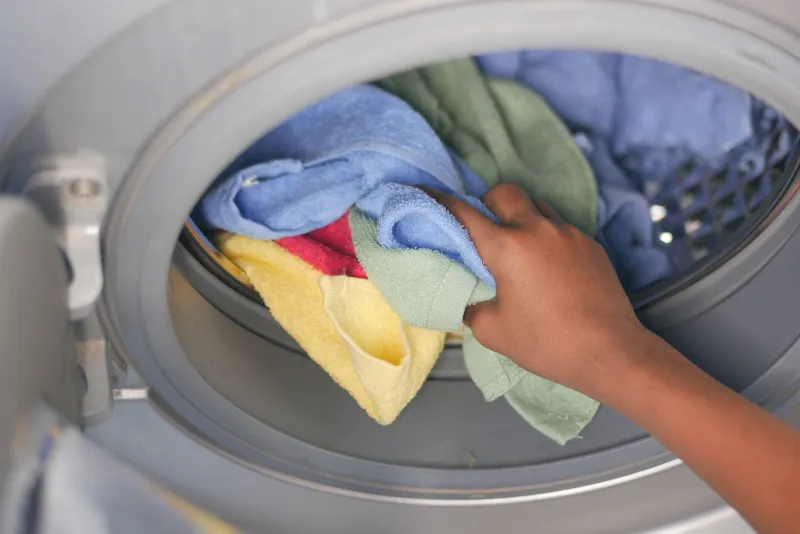
Somewhere in America right now, someone is buying a washing machine on their phone. They're comparing models, reading reviews, selecting a delivery window, and entering a card number — all in about eight minutes, probably while watching television. The machine will arrive in two days. The purchase barely registers as an event.
Sixty or seventy years ago, that same decision would have been a household milestone. Families saved for it. They debated it. They negotiated it in person with a store owner who knew their name. And for many American families — particularly in the years right after World War II — the question wasn't which washing machine to buy. It was whether buying one was even possible.
The Real Price of Making Life Easier
The postwar decade is often remembered as a golden age of American domestic life — new suburbs, new cars, new kitchens gleaming with modern appliances. And in the advertising of the era, washing machines, refrigerators, and electric ranges appeared as the natural birthright of every American family, the hardware of the good life, available to anyone willing to reach for it.
The reality was considerably more complicated.
In 1950, a mid-range automatic washing machine — the kind that actually did the full wash cycle without manual intervention — retailed for somewhere between $200 and $300. That doesn't sound alarming until you place it alongside median household income for that year, which sat at roughly $3,300. A single washing machine represented somewhere between six and eleven weeks of a typical family's total earnings. Not disposable income. Total income, before rent, food, utilities, or anything else.
A refrigerator ran similar numbers. A vacuum cleaner was more affordable but still represented a meaningful outlay. Buying all three — the basic trifecta of modern household equipment — in the same year was simply not realistic for most working-class families. These were purchases you planned around, not purchases you made impulsively.
The Installment Plan and the Store Owner Who Held All the Cards
For families who couldn't pay cash outright — which was most families — the path to appliance ownership ran through the installment plan. And unlike today's standardized consumer credit, the installment arrangements of the 1940s and 1950s were deeply personal, inconsistent, and often tilted sharply in favor of the seller.
You went to the appliance store — usually a locally owned shop, not a chain — and you made your case to the owner or manager. He knew your employer, possibly your landlord, maybe your pastor. He assessed your reliability through a combination of reputation, references, and gut feeling. If he decided you were creditworthy, he offered you a payment plan: typically a meaningful down payment followed by monthly installments over one to three years.
The terms varied enormously depending on who you were and how well the store owner liked your prospects. Interest wasn't always disclosed transparently. Missed payments could result in repossession — the store had the right to take the machine back, often with no refund of what you'd already paid. The system worked, but it worked on the seller's terms.
For Black families in the South, or recent immigrants in northern cities, access to even this imperfect credit system was frequently blocked by discrimination. Appliance ownership in those communities lagged significantly behind white middle-class households — not because of different values or priorities, but because the financial infrastructure simply wasn't available on equal terms.
What the Machine Actually Changed
All of which makes the significance of finally getting the appliance even more striking. The washing machine in particular deserves a moment of genuine recognition, because what it replaced was one of the most physically punishing routines in domestic life.
Before the electric washer, laundry day was exactly that — an entire day, sometimes two. Water had to be heated on the stove, hauled in large quantities, and poured into a washtub. Clothes were scrubbed by hand on a washboard, wrung out manually or through a hand-cranked wringer, rinsed, wrung again, and hung to dry. For a family of four or five, this process consumed enormous physical energy and the better part of twelve hours. It happened every single week.
For women who carried the primary burden of this work — and in 1950, that was almost universally the case — the arrival of an automatic washing machine wasn't a luxury. It was the recovery of somewhere between four and eight hours of brutal physical labor every week. Multiplied across a year, that's hundreds of hours of life returned.
The women who finally got these machines often described the experience in terms that sound almost emotional. Not just convenient — liberating. The ability to load a machine, turn a dial, and walk away was a transformation in daily existence that people who grew up with automatic washers genuinely cannot fully appreciate.
Two-Day Shipping and Zero Friction
Today, the average American household replaces a major appliance with remarkably little ceremony. Consumer credit has been standardized, regulated, and made widely accessible. Retailers offer zero-percent financing promotions. Online platforms allow price comparison across dozens of sellers in seconds. And the actual cost of appliances, adjusted for inflation and relative to income, has dropped dramatically — a mid-range washing machine today represents a fraction of the income share it consumed in 1950.
The friction that once surrounded these purchases — the saving, the negotiating, the waiting, the genuine risk of repossession — has been almost entirely engineered away. Which is, by any reasonable measure, a good thing. Easier access to tools that improve daily life is progress, full stop.
But something is also lost when a purchase that once represented months of planning becomes a ten-minute transaction. The families who saved for their first washing machine understood its value in a way that's hard to replicate when delivery arrives before you've had time to reconsider.
They knew exactly what it cost. And they knew exactly what it gave them back.