Built to Outlast You: The Forgotten Era When Americans Bought Things Once and Kept Them Forever
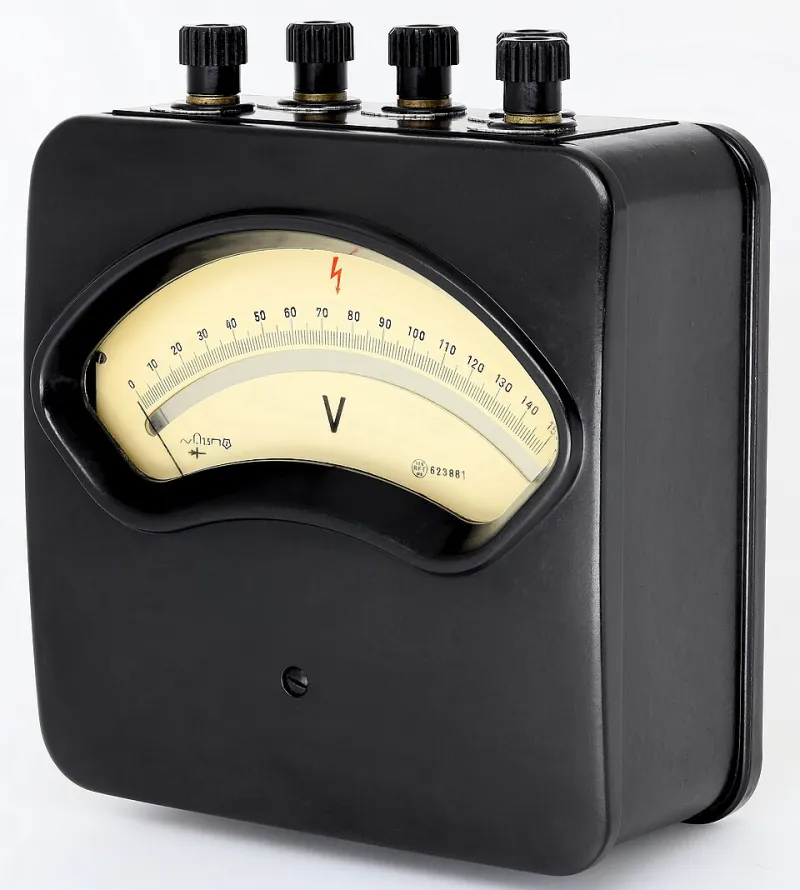
Photo: Mister rf, CC BY-SA 4.0, via Wikimedia Commons
There's a particular kind of American basement that tells a story without saying a word. In it, somewhere between the holiday decorations and the old paint cans, sits a chest freezer from 1962 that still works. Or a set of cast-iron cookware that belonged to a grandmother who's been gone for thirty years. Or a pair of leather work boots, resoled twice and still going. These objects weren't built to last a lifetime by accident. They were built that way on purpose — because that was what buyers expected, and manufacturers knew it.
The mid-twentieth century operated on a principle that today sounds almost quaint: you bought something once, you took care of it, and it served you for decades. That expectation shaped everything — how products were designed, how money was spent, and how Americans related to the things they owned. The story of how that changed is also the story of how modern consumer culture quietly rewired our sense of value.
The Postwar Promise of the Permanent Purchase
In the years following World War II, American manufacturing was at its peak confidence. Factories that had built tanks and aircraft were now turning out refrigerators, washing machines, automobiles, and suits — and they were building them with the same engineering seriousness. Quality wasn't just a marketing claim. It was a competitive necessity in a market where buyers were cautious, memories of Depression-era scarcity were fresh, and the idea of wasting money on something that fell apart quickly was genuinely offensive.
A man buying a winter coat in 1950 was making an investment he expected to last ten years minimum, probably twenty. He'd have it relined when the lining wore. He'd have it cleaned and pressed every season. He'd hand it to a son when it no longer fit. The coat was part of his life in a way that today's $79 fast-fashion parka simply cannot be.
The same logic applied to appliances. A Frigidaire refrigerator from the early 1950s was engineered with accessible components, repairable motors, and replaceable parts — because the assumption was that a repair technician would service it for years. Manufacturers designed for longevity because consumers demanded it and repairability was expected. Buying an appliance was a major household decision, made carefully and infrequently.
The Numbers Tell the Story
Consider what the math looked like. In 1960, the average American household spent roughly 10 percent of its income on clothing — but bought far fewer items than a household today. What they bought was better made, more expensive per piece, and expected to last. Today, Americans spend a smaller share of income on clothing but buy dramatically more of it, much of it cheap, much of it discarded within a year.
The same pattern shows up in appliances. A washing machine purchased in 1965 had an average lifespan of around 15 to 20 years. Today's equivalent machine, loaded with digital features and marketed aggressively, averages closer to 10 years — and is often designed in ways that make repair uneconomical, nudging consumers toward replacement rather than maintenance.
These aren't coincidences. They're the outputs of a deliberate economic model.
When Planned Obsolescence Became the Plan
The concept of planned obsolescence — designing products to become outdated or unusable within a predictable timeframe — wasn't invented in the modern era. General Motors' Alfred Sloan was experimenting with annual model changes in the 1920s as a way to make last year's car feel inadequate. But the strategy became truly systematic in the consumer economy of the late twentieth century.
 Photo: General Motors, via cdn.freelogovectors.net
As manufacturing costs dropped and global supply chains made cheap production easier, the economic incentive shifted. A company that built a refrigerator to last thirty years sold you one refrigerator. A company that built one to last ten sold you three in the same period. The math was straightforward, and the industry followed it.
Fast fashion took this logic to its extreme. Brands like Zara and H&M pioneered a model in which new styles arrived in stores every few weeks, prices were low enough to encourage impulse buying, and quality was calibrated to last just long enough that you didn't feel cheated — but not long enough that you'd stop coming back. Americans went from buying an average of around 25 garments per year in the 1990s to over 65 by the 2010s. Most of those garments ended up in landfills within a year.
What Ownership Used to Mean
Beyond the financial arithmetic, something more personal was lost. When objects were built to last, ownership meant something different. You developed a relationship with the things you owned — not in a sentimental or eccentric way, but in the practical sense that you knew them, maintained them, and expected them to be part of your life for a long time.
A man who wore the same pair of dress shoes for fifteen years knew those shoes. He'd had them resoled, had the heels replaced, kept them polished and stored on trees. They fit him perfectly because they'd shaped themselves to his foot over years of wear. That kind of accumulated fit — physical and psychological — is impossible with an object you expect to throw away in eighteen months.
The repairman was a figure of genuine social importance in this world. Appliance repair shops, shoe cobblers, tailors who let out seams and replaced zippers — these businesses thrived because the assumption was always that a broken thing should be fixed, not discarded. When the economics of replacement undercut the economics of repair, an entire category of skilled work quietly disappeared.
The Cost We're Still Paying
The modern consumer economy delivers variety, accessibility, and low prices that the postwar shopper couldn't have imagined. That's real, and it matters. But it comes with costs that tend to be distributed unevenly and felt gradually.
Environmentally, the volume of discarded goods — clothing, electronics, appliances — has created waste streams that previous generations never had to manage. Financially, the illusion of cheap goods often masks higher long-term spending, since replacing something three times costs more than buying one good version once. And culturally, the disposability of objects has subtly shifted how Americans think about quality, permanence, and value.
The grandmother's cast-iron skillet still in use eighty years later isn't just a cooking tool. It's a small, quiet argument for a different way of thinking about what we buy and why. Whether that argument still has an audience is a harder question — but it's worth asking.