Nowhere to Be and Nothing to Do: What We Lost When Waiting Rooms Got Wi-Fi
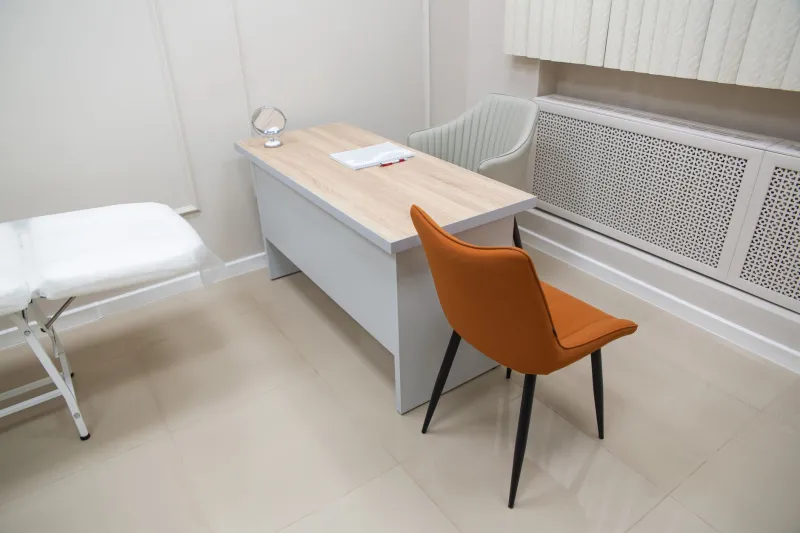
There was a particular kind of misery to the doctor's waiting room in 1991. Plastic chairs bolted together in rows. A fish tank that may or may not have been cleaned since the Reagan administration. A stack of magazines where the most recent issue of People was from four months ago, and someone had already done the crossword in pen.
You sat there. You waited. And there was absolutely nothing else you could do about it.
Today, that same waiting room looks almost identical on the surface — same chairs, possibly the same fish tank — but something fundamental has changed. Every person in the room is somewhere else entirely, scrolling through Instagram, answering emails, watching YouTube with earbuds in. The waiting hasn't gotten shorter. We've just learned to escape it.
The question worth asking is whether that escape has actually made us better off.
The Ritual of the Wait
For most of the twentieth century, visiting a doctor meant surrendering a chunk of your day to a kind of enforced stillness that had no real equivalent anywhere else in American life. You couldn't make phone calls. You couldn't do work. You couldn't even have a conversation without the whole room hearing it. You were, in the truest sense, just waiting.
And in that waiting, strange things happened. You'd flip through a magazine you'd never normally pick up — a National Geographic from 1987, maybe, or a Better Homes and Gardens with a pot roast recipe that you'd somehow find yourself genuinely reading. You'd glance at the other patients and wonder, briefly, what brought them in. You'd stare at a poster about hand-washing technique long enough to actually memorize it. You'd think.
That last part sounds almost quaint now. But there's genuine research suggesting that boredom — real, unstructured, nothing-to-do boredom — serves an important function. It's when the brain shifts into a mode psychologists call the default network: the mental state associated with creativity, self-reflection, and processing emotions. The waiting room, for all its discomfort, was delivering something valuable without anyone realizing it.
What Changed, and When
The shift didn't happen overnight. Through the late 1990s and into the 2000s, waiting rooms started getting televisions — usually tuned to daytime TV or, in a particularly aggressive move, CNN. That was the first crack in the silence. Suddenly there was noise, stimulation, something to passively absorb. The communal boredom started to fragment.
But it was the smartphone — really the iPhone era from 2007 onward — that finished the job entirely. Within a few years, the waiting room had been transformed from a shared experience of enforced patience into a collection of individuals, each sealed inside their own digital bubble. By 2015, it would have been unusual to look up from your phone in a waiting room. By 2020, it would have felt almost strange not to.
Efficiency improved in other ways too. Online check-in, digital intake forms, appointment reminder texts — the administrative friction of a doctor's visit has genuinely decreased. You no longer fill out the same paper form you filled out six months ago. You don't have to call during a specific two-hour window to make an appointment. These are real improvements, and it would be dishonest to pretend otherwise.
The Accidental Conversations That Don't Happen Anymore
But here's what the data doesn't capture: the conversations that used to happen in waiting rooms.
With nothing else to do and a shared situation to bond over, strangers talked. Not always, and not about anything particularly profound — but they talked. The woman next to you mentioned a specialist who had helped her with the same knee problem you'd been ignoring. The older gentleman across the room turned out to have worked at the same company as your father. A mother with a toddler and a look of exhaustion caught your eye and you both smiled in a way that required no explanation.
These weren't life-changing moments. But they were human ones. And they happened precisely because there was nothing else competing for your attention.
Now, the ambient noise of a waiting room is the soft tap of thumbs on glass. Eye contact is rare. Spontaneous conversation is almost nonexistent. We've solved the boredom problem and inadvertently sealed ourselves off from the random human warmth that used to fill the gap.
The Patience We Stopped Practicing
There's something else worth considering: waiting rooms used to teach patience in a way that very little else did. You had no control over the timeline. The doctor was running behind. That was simply the situation, and you had to make peace with it.
That kind of low-stakes, involuntary patience — the ability to sit with discomfort without immediately reaching for a distraction — turns out to be a skill. And like most skills, it atrophies when you stop using it. Today, a five-minute wait without your phone can feel genuinely uncomfortable in a way that previous generations would have found baffling.
None of this means smartphones are bad, or that we should be nostalgic for four-month-old magazines and broken fish tanks. Progress is progress, and being able to answer an urgent email while waiting for your annual physical is a legitimate convenience.
But the waiting room is a useful mirror for something broader: the way we've quietly eliminated almost every moment of genuine stillness from daily life, often without stopping to ask what that stillness was doing for us in the first place.
Sometimes the most interesting thing in the room was just your own thoughts. And we gave that up remarkably fast.