Ninety Minutes of Silence, Then the Perfect Song: What Making a Mixtape Actually Cost You
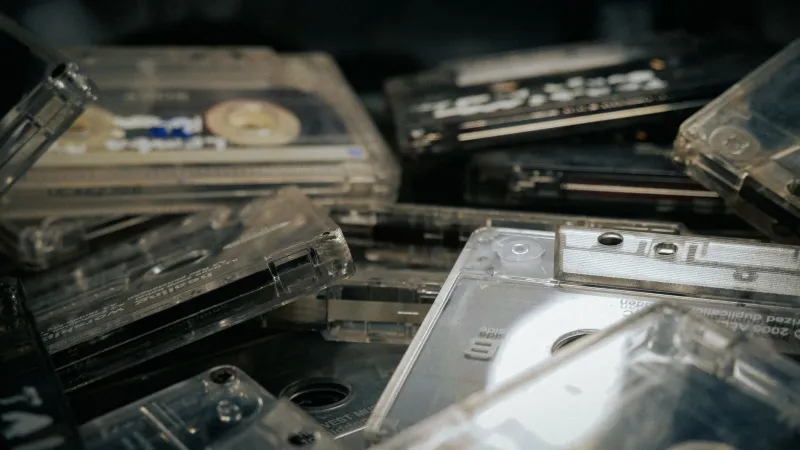
Picture this: It's a Saturday afternoon somewhere in the mid-1980s. You're sitting on the floor of your bedroom, a blank 90-minute cassette loaded into the tape deck, your finger hovering over the record button. The radio DJ is talking. Still talking. You're waiting. And then — finally — the opening notes of the exact song you needed, and you slam the button down and pray you didn't miss the first beat.
This was how music was curated before curation became a word tech companies used to describe what an algorithm does in 0.3 seconds.
The mixtape era is gone. What replaced it is genuinely miraculous — and genuinely missing something that's hard to name.
The Effort Was the Point
Making a mixtape wasn't a task you completed quickly. It was a project. You needed blank tapes (usually bought in bulk from a drugstore, because you went through them constantly). You needed access to either a radio or another tape deck. You needed time — real, uninterrupted time — and you needed to care enough to spend it.
Recording from the radio meant sitting through commercials, bad segues, and songs you didn't want, waiting for the one you did. Recording from another tape meant calculating the running times carefully so you didn't end up with three minutes of silence at the end of Side A or, worse, cutting a song off mid-chorus because you misjudged the math.
And if you made a mistake — recorded over a song you wanted to keep, missed the opening of a track, let a DJ's voice bleed into the beginning of a ballad — you started that section over. There was no undo button. There was only patience and tape.
What All That Friction Actually Created
Here's what's interesting about the difficulty: it made the finished product mean something.
When you gave someone a mixtape, you were giving them documented proof of how much time you'd spent thinking about them. Every song choice was deliberate. The sequencing — the way one track faded into the next — was something you'd actually planned. The handwritten track listing on the J-card insert, sometimes decorated with drawings or inside jokes, was a physical artifact of attention.
The recipient knew all of this. They knew what went into it. So when they pressed play, they weren't just hearing music. They were experiencing someone else's effort, translated into sound.
There's a reason mixtapes became cultural shorthand for romantic interest. Making one for someone was a declaration. Not necessarily of love — sometimes just of "I was thinking about you for two hours on a Saturday, and here's the proof."
Streaming Solved the Wrong Problem
Today, building a playlist takes about four minutes and requires almost no decisions you can't immediately reverse. Spotify, Apple Music, and YouTube Music all let you add, remove, and reorder tracks instantly. If you don't like what you hear, you skip it. If the algorithm suggests something better, you follow the suggestion.
This is, objectively, more convenient. It's also made music dramatically more disposable.
When you can access essentially all recorded music at any moment, individual songs lose a kind of weight they used to carry. You don't memorize lyrics the same way when you can look them up in three seconds. You don't replay an album obsessively when there are 80 million other albums waiting. The abundance is real, but so is the numbness that comes with it.
Musicologists and cultural critics have written about this — the way unlimited access to music has paradoxically made it feel less significant to many listeners. There's even a term for it in psychology: "the paradox of choice," the idea that more options can lead to less satisfaction rather than more.
The Songs You Waited For
There's a specific kind of relationship you used to have with music that streaming simply can't replicate. It was the relationship built by scarcity.
If you loved a song in 1979 and didn't own the album, you waited. You listened to the radio with your finger near the record button for weeks. You heard it at a friend's house and asked them to play it again. You might not hear it for months, and when you finally did, it hit differently — with the accumulated weight of all that waiting behind it.
That waiting created attachment. The song wasn't just a song. It was something you'd pursued. Something that had, in a small way, cost you something.
Today, you can hear any song ever recorded within ten seconds of thinking of it. Which is genuinely wonderful. And which also means that almost no song will ever feel that important again.
What We Made When We Made Mixtapes
The cassette tape era was, in retrospect, a specific kind of golden age for music as communication. Not because the technology was better — it obviously wasn't — but because the limitations forced a kind of intentionality that's very hard to replicate now.
You couldn't put 500 songs on a mixtape. You had 90 minutes, maybe 120 if you bought the longer tapes. So you chose. You committed. You said: these songs, in this order, for this person, right now.
That specificity — that willingness to narrow down, to make a choice and live with it — is something the streaming era has made almost unnecessary. And in making it unnecessary, it's made it rare.
Somewhere there's a cassette tape in a shoebox that someone made for someone else in 1988. The songs are probably a little warped by now. The handwriting on the J-card has faded. But if you found it and pressed play, you'd be hearing something that took real effort to make and real intention to give.
That's harder to say about a Spotify link.