From Scratch to Swipe: How Feeding Kids at Lunchtime Quietly Redefined American Motherhood
Somewhere in America right now, a mother is opening an app to order her kid's lunch. She's doing it from her car, between meetings, with one hand. It takes about forty-five seconds. A generation ago, that same lunch would have taken forty-five minutes — and it would have started the night before.
The humble packed lunch might seem like a small thing. But look closely, and it turns out to be a surprisingly accurate mirror of how American family life has transformed over the past half-century. What mothers put in a lunch box, and how they thought about it, reveals everything about the pressures, expectations, and trade-offs that have reshaped parenthood itself.
The Morning Ritual Nobody Questioned
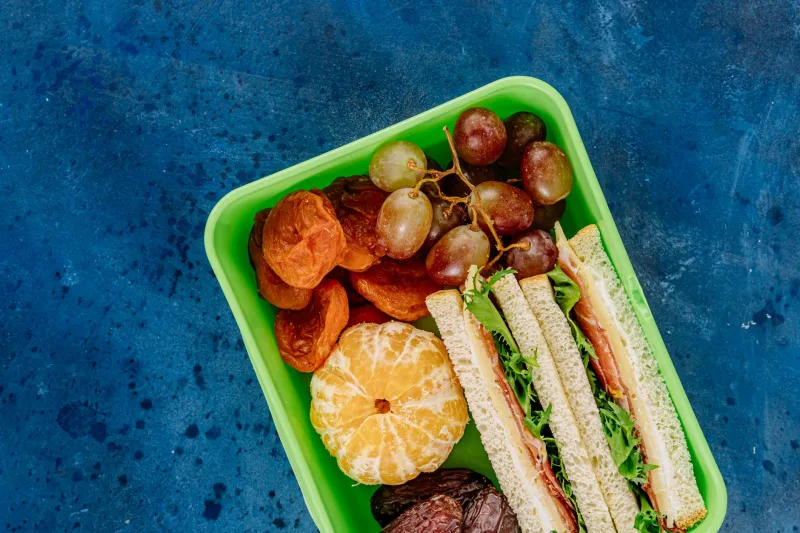
For most of the twentieth century, packing a child's school lunch wasn't a choice — it was simply part of the job. Mothers (and it was almost always mothers) woke early, pulled out the bread, and got to work. A typical lunch box from the 1950s or 60s might hold a sandwich made from last night's roast, a thermos of soup or warm milk, a piece of fruit, maybe a cookie wrapped in wax paper. Nothing fancy. Nothing bought.
The thermos alone was a small act of engineering. You had to heat the soup, pour it carefully, make sure the lid was sealed tight enough that it wouldn't leak into the math homework. Then there was the question of what your child actually liked, what was in the refrigerator, and whether the bread had gone stale. All of this happened before 7 a.m., usually while also making breakfast and getting everyone out the door.
What's striking isn't just the effort — it's that nobody considered it remarkable. It was invisible labor, the kind that didn't get talked about because it didn't get counted. Mothers did it because that was what mothers did. The cultural expectation was absolute and largely unquestioned.
When Convenience Started Creeping In
The shift didn't happen overnight. It crept in gradually, starting in the 1970s and accelerating through the 80s and 90s as more women entered the workforce and the food industry responded with products engineered specifically for busy parents.
Lunchables arrived in 1988 and changed everything. Here was a product that did the assembling for you — crackers, meat, cheese, all in separate little compartments. Kids loved the novelty. Parents loved the time saved. Nutritionists were less enthusiastic, but convenience had momentum that nutrition couldn't easily stop.
By the time juice boxes, pre-sliced fruit pouches, and individually wrapped snack packs became standard grocery store fixtures, the homemade lunch had quietly begun its retreat. It wasn't gone — plenty of families still packed from scratch — but it was no longer the default. It had become a choice, which meant it had also become a statement.
The App-Ordered Afternoon
Today's landscape is almost unrecognizable by comparison. School cafeterias in many districts now operate on digital payment systems where parents load money into an account and kids tap a card or scan a number. No cash, no lunch box, no thermos. For families who want something more tailored, food delivery apps have expanded to include school-friendly options in some urban areas. Meal-kit services offer pre-portioned ingredients that take some of the planning out of the equation. And the sheer volume of grab-and-go options at every grocery store means that assembling a lunch from packaged components takes minutes rather than the better part of a morning.
The economic picture has shifted too. Pre-packaged convenience used to be a luxury. Now, depending on where you live and what you're buying, it can actually be cheaper than cooking from scratch — especially once you factor in the cost of a parent's time. For dual-income households where both adults are working full days, that calculation matters.
But something has also been lost in the transaction. The handmade lunch carried information — it told a child that someone had thought about them specifically that morning. That their preference for no mustard had been remembered. That someone had cut the crusts off because they knew. A school cafeteria swipe communicates something different, even if the food is perfectly adequate.
What the Lunch Box Was Really Carrying
There's a reason food historians and sociologists keep returning to this topic. The packed lunch wasn't just about calories — it was about the texture of daily family life. It was one of the small, repeated acts through which parents communicated care and children felt known.
That doesn't mean today's parents care less. Anyone who has spent ten minutes navigating a school nutrition portal, checking allergen labels, and trying to figure out whether the cafeteria serves anything their kid will actually eat knows that feeding children still requires significant mental energy. It's just distributed differently now — less physical preparation, more administrative management.
The cultural expectations have shifted too. Today, a mother who packs a carefully assembled bento box with color-coded vegetables and a handwritten note might be praised on Instagram or quietly judged as having too much time on her hands, depending on who's looking. The act that was once invisible has become conspicuous — a performance of a particular kind of parenting identity.
Progress With a Side of Perspective
Convenience has genuinely improved life for millions of American families. The idea that a working parent should spend an hour each morning hand-crafting a nutritionally balanced lunch while also holding down a career was always an unrealistic standard, even when it was the norm. The products and systems that have replaced that ritual have freed up real time and reduced real stress.
But it's worth pausing to notice what quietly disappeared. The morning routine of making a child's lunch was one of the few moments in the day that required a parent to think specifically and practically about what that particular child needed. It was planning made edible. Love made portable.
The lunch box has been replaced. What filled it hasn't been — not entirely. But how we fill it, and who does the filling, looks almost nothing like it used to.