Locked, Lost, and Forgotten: The Teenage Privacy That Smartphones Erased Forever

Somewhere in a box in a closet — maybe your parents' house, maybe a storage unit you keep meaning to clean out — there might be a diary. Small, probably. A little embarrassing. Maybe with a lock that was never particularly serious about keeping anyone out. And if you're lucky, nobody ever read it.
For generations of American teenagers, that diary was the whole point. A place where you could be completely, catastrophically wrong about the world, and nobody would ever know.
That kind of privacy doesn't really exist anymore. And we're only beginning to understand what we lost when it disappeared.
When Forgetting Was the Default
Growing up in the decades before the internet meant that your teenage years came with a built-in expiration date. The humiliating crush. The bad opinion you stated with total confidence. The argument with your best friend that felt like the end of the world. These things happened, they stung, and then — gradually, mercifully — they faded.
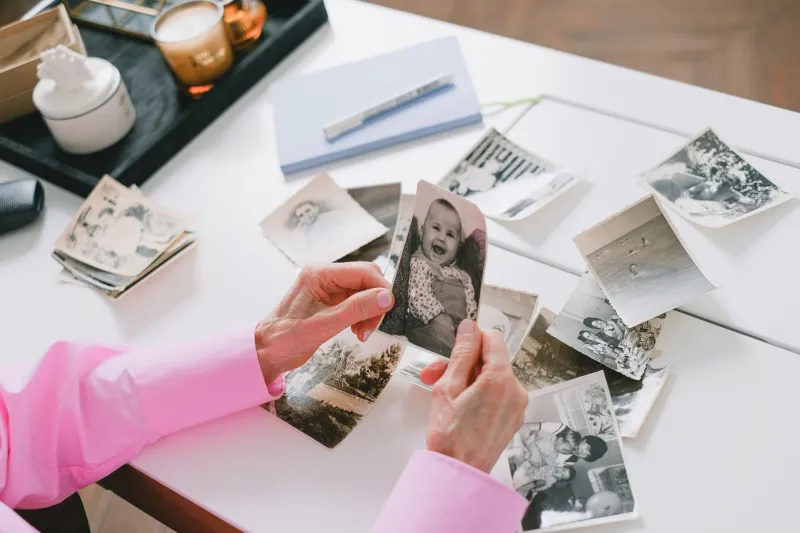
Physical evidence was the only record that mattered, and physical evidence was easy to destroy. You could throw away a letter. You could tear a page out of a journal. A phone call made from the kitchen while your mom watched TV in the next room might be overheard, but it wasn't logged, timestamped, or stored on a server somewhere in Nevada.
The forgetting wasn't just convenient. It was developmental. Psychologists have long understood that adolescence is a period of trying on identities — experimenting with who you are, making mistakes, revising your self-image. The ability to walk away from an earlier version of yourself was a feature, not a bug. You got to decide which parts of your teenage self to carry forward and which to quietly leave behind.
The Party You Attended Lives Online Forever
Contrast that with the experience of a teenager today. Every text message is archived. Every photo posted to a social platform — even one deleted an hour later — may have been screenshotted, cached, or captured by a platform's own servers. Location data tracks movement. Search history reveals curiosity. The algorithm remembers what you lingered on, even if you never clicked.
And unlike a diary with a flimsy lock, this information isn't fully in the teenager's control. Parents can monitor it. Schools have disciplined students over it. College admissions offices have been known to review it. Future employers will search for it.
The result is something genuinely new in human history: a generation growing up under conditions of near-total documentation. Every phase, every opinion, every social stumble is potentially part of a permanent record.
The Mixtape Confession vs. The Public Post
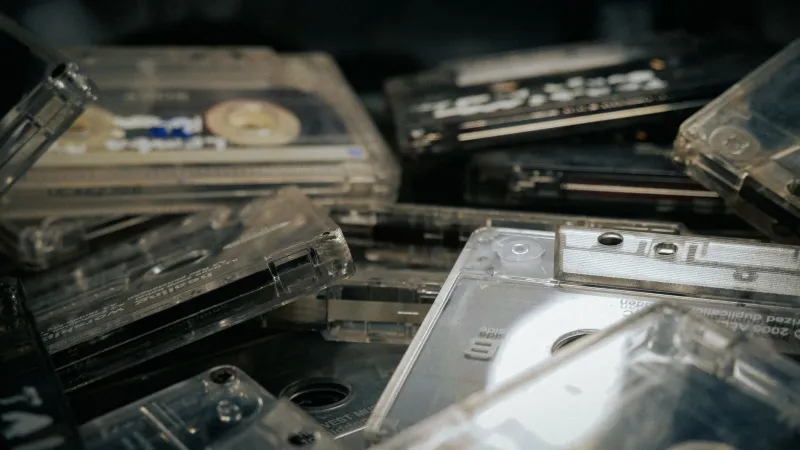
There's an interesting parallel in the way teenagers used to communicate privately versus how they do now. Passing a handwritten note in class — folded into an elaborate shape, designed to be read by exactly one person — was an act of deliberate intimacy. So was recording a song off the radio onto a cassette and leaving it in someone's locker. The message was personal, physical, and perishable.
Social media flipped that dynamic entirely. What was once a private confession is now a public broadcast. What was once shared between two people is now visible to hundreds. And the social pressure to perform — to present a version of yourself that earns likes and engagement — has replaced the old pressure simply to figure out who you actually are.
This doesn't mean teenagers today are less genuine. It means they're navigating something their parents never had to: the awareness that they're always, on some level, being watched.
What Privacy Actually Did for Growing Up
It's worth being specific about what teenage privacy made possible, because it wasn't just about hiding things. It was about having a space to process things.
The diary wasn't just a place to record events. It was a place to work through emotions without an audience. To be dramatic without consequences. To say something you weren't sure you believed yet, and come back to it later with fresh eyes. That private space — messy, unfiltered, and entirely your own — was part of how a person learned to understand themselves.
Mental health researchers have noted rising rates of anxiety and depression among American teenagers over the past two decades, a period that maps closely onto the rise of smartphones and social media. The causes are almost certainly complex. But the loss of private cognitive space — the room to fail and recover without documentation — is increasingly part of the conversation.
The Past Had Something We Didn't Have a Name For
Nobody in 1987 sat down and said, "I'm grateful that my embarrassing phase will eventually be forgotten." They just lived it, and moved on, and became someone slightly different on the other side.
That process — messy, private, largely invisible to the outside world — was how adolescence worked for most of human history. You got to draft yourself in private before presenting yourself to the world.
Today's teenagers are, in a very real sense, writing their first draft in public. That's an extraordinary thing to ask of a person who's still figuring out who they are.
The locked diary with the flimsy key wasn't just a keepsake. It was a kind of protection. And the fact that we don't have an equivalent for the digital age — something that genuinely expires, genuinely disappears, genuinely belongs only to the person who wrote it — says a lot about what we've quietly given up in exchange for connectivity.
Some things are worth remembering. And some things, it turns out, were better off forgotten.