When Your Neighborhood Pharmacy Was Also the Town Square: The Rise and Fall of America's Soda Fountain Culture
When Your Neighborhood Pharmacy Was Also the Town Square: The Rise and Fall of America's Soda Fountain Culture
Walk into any CVS or Walgreens today, and you'll find fluorescent-lit aisles of packaged goods, a pharmacy counter staffed by rotating technicians, and maybe a few plastic chairs near the blood pressure machine. It's efficient, sterile, and utterly forgettable. But for most of the 20th century, your neighborhood drugstore looked nothing like this clinical retail environment.
Instead, it was the beating heart of American community life — part pharmacy, part restaurant, part social club, and part counseling center all rolled into one intimate space anchored by a gleaming soda fountain.
The Pharmacist Who Knew Everyone's Secrets
In 1950, when you walked into Miller's Drug Store on Main Street, you weren't just another customer in a database. You were Mrs. Henderson's daughter, the one who worked at the telephone company and always ordered a vanilla phosphate after her shift. The pharmacist — often the store owner — knew your family's medical history going back decades, not because it was stored in a computer system, but because he'd been mixing remedies for your grandmother since before you were born.
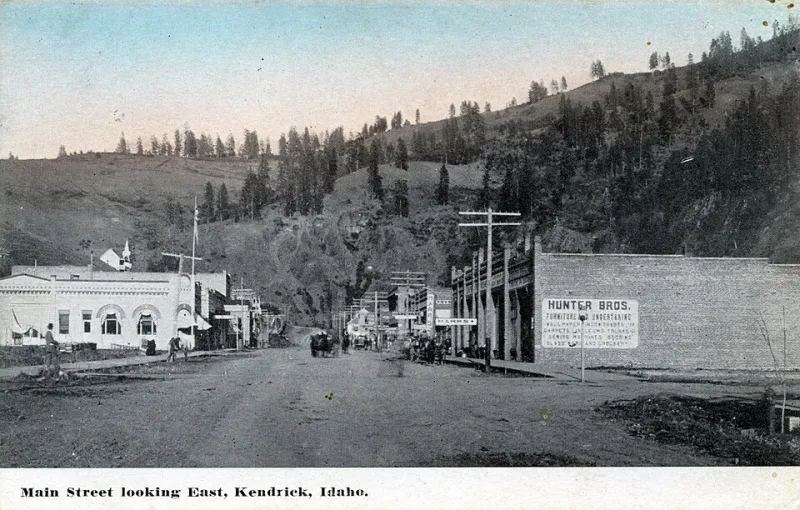
 Photo: Main Street, via www.incide.it
These pharmacists were part chemist, part confessor. They'd recommend a tonic for your nerves, suggest something for your husband's back pain, and discreetly provide remedies for conditions people were too embarrassed to discuss with their doctor. The relationship was deeply personal and built on trust that developed over years of face-to-face interactions.
Today's pharmacists are undoubtedly more educated and work within stricter safety protocols, but they're also interchangeable employees who might not work the same shift twice in a month. The institutional knowledge that once made your neighborhood druggist an irreplaceable community resource has been replaced by computer systems and corporate policies.
Where Teenagers Learned to Be Adults
The soda fountain wasn't just a place to grab a quick drink — it was America's informal finishing school for adolescents. High schoolers would pool their pocket change for a shared banana split, learning the delicate social dynamics of dating, friendship, and small-town politics while perched on red vinyl stools.
A cherry Coke cost a nickel, and for that modest investment, you could occupy a spot at the counter for hours, watching the pharmacist work, listening to adult conversations, and absorbing the rhythms of community life. The soda jerk — usually a teenager himself — learned customer service, money handling, and the art of conversation while mixing elaborate ice cream concoctions.
Compare this to today's teenage social spaces: shopping mall food courts with their corporate chain restaurants, or more likely, bedrooms where kids connect through screens rather than sharing physical space. The soda fountain provided something irreplaceable — a supervised but relaxed environment where young people could practice being adults while still under the gentle oversight of trusted community members.
The Daily Rhythm of Community Connection
Every neighborhood drugstore had its regulars, and their patterns were as predictable as clockwork. The businessman who stopped for a Bromo-Seltzer every morning after his commute. The group of retired men who gathered at 2 PM for coffee and conversation. The mothers who brought their children for ice cream after doctor appointments, turning a potentially traumatic experience into a treat.
These daily interactions created a social fabric that bound communities together. Information flowed naturally — who was sick, who was looking for work, whose daughter was getting married. The drugstore served as an informal communication network long before social media existed.
Today's pharmacy visits are purely transactional. You text when your prescription is ready, pick it up at the drive-through window, and leave without speaking to another human being. It's undeniably more convenient, but it's also completely disconnected from the community-building function that drugstores once served.
When Healthcare Was Personal
Perhaps most significantly, the old-style drugstore represented a completely different approach to healthcare — one that was holistic, personal, and deeply integrated into daily life. Your pharmacist didn't just fill prescriptions; he provided health advice, recommended over-the-counter remedies, and often served as the first line of medical consultation for families who couldn't afford frequent doctor visits.
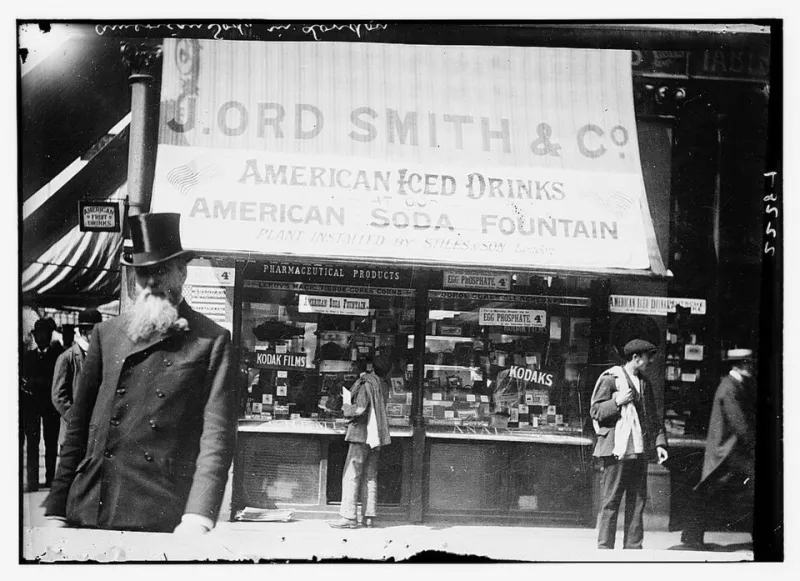
The soda fountain itself was often marketed with health claims. Coca-Cola was originally sold as a medicinal tonic, and many fountain drinks contained ingredients believed to have therapeutic benefits. While we now know most of these claims were dubious, they reflected a time when the line between medicine and daily nutrition was much blurrier.
Modern pharmacy practice is infinitely more scientific and regulated, but it's also more fragmented. Your pharmacist today is a specialist focused exclusively on medication management, while your social needs, nutritional questions, and general health concerns are addressed by entirely separate systems — if they're addressed at all.
What We Lost When Efficiency Won
The disappearance of the neighborhood drugstore soda fountain represents more than just a shift in retail trends — it's a perfect example of how America's pursuit of efficiency and scale eliminated institutions that served multiple community functions simultaneously.
Today's chain pharmacies are undoubtedly better at their core function of safely dispensing medication. They're open longer hours, carry larger inventories, and employ pharmacists with more advanced training. But in optimizing for pharmaceutical efficiency, we lost the social infrastructure that once made healthcare feel personal and community-centered.
The next time you're standing in line at a modern pharmacy, try to imagine that same space filled with the sounds of conversation, the hiss of the soda fountain, and the gentle chaos of a community gathering place. It might help you understand why older Americans sometimes speak so wistfully about the "good old days" — not because the medicine was better, but because getting it didn't require you to navigate an impersonal corporate system designed to minimize human contact.
In our rush toward efficiency, we didn't just change how we buy medicine. We fundamentally altered how communities connect, how teenagers learn social skills, and how healthcare fits into the fabric of daily life. The soda fountain may seem like a quaint anachronism, but its disappearance marks the moment when America chose convenience over community — a trade-off whose full cost we're still calculating today.