When Every Call Was a Financial Decision: The True Cost of Staying Connected in 1965
The Phone Call That Cost a Week's Groceries
Picture this: It's Christmas morning 1965, and your family wants to call Grandma in California to wish her happy holidays. But first, Dad checks the clock, pulls out a notepad to time the call, and reminds everyone to keep it under three minutes. Why? Because that brief conversation will cost nearly $15 in today's money.
In 1965, a three-minute long-distance call from New York to Los Angeles cost $1.85 during peak hours—roughly $17.50 in 2024 dollars. That's more than many families spent on groceries for an entire day. For context, the average American worker earned about $4,600 per year, making long-distance calls a genuine luxury that required careful financial planning.
When Distance Actually Meant Distance
The telephone company's pricing structure in the 1960s was brutally simple: the farther you called, the more you paid. A lot more. Calls were priced by distance zones, with rates that would shock modern consumers. Calling within your state might cost 35 cents for three minutes, but crossing multiple time zones could easily run $2 or more—equivalent to $20 today.
Families developed elaborate strategies around these costs. Many households designated specific times for long-distance calls, usually Sunday evenings when rates dropped slightly. Others relied on a system of "emergency signals"—letting the phone ring once and hanging up to indicate "call me back" to relatives who had better long-distance rates.
The psychological weight of these costs shaped entire conversations. People spoke in rapid-fire bursts, cramming news, updates, and expressions of love into impossibly short windows. "How are you, we're fine, kids are good, talk soon, love you, goodbye" became an art form of efficient communication.
The Ritual of the Long-Distance Call
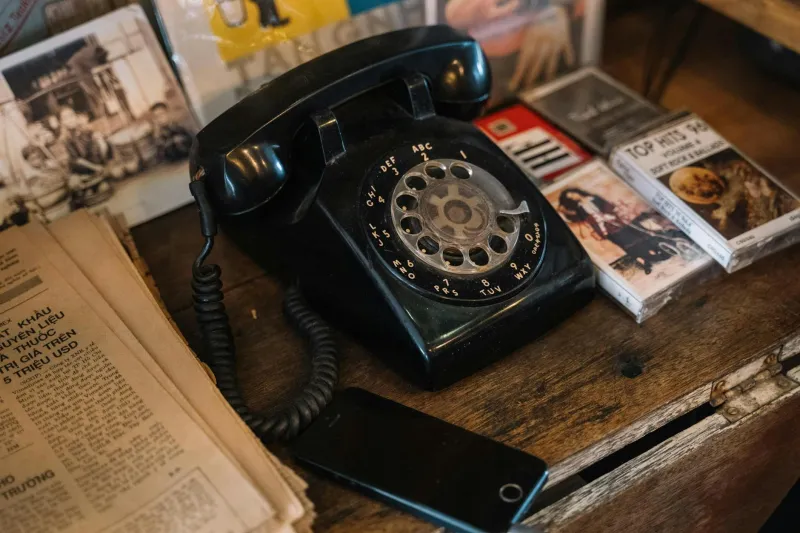
Making a long-distance call in 1965 wasn't just expensive—it was complicated. You couldn't simply dial the number. Most calls required operator assistance, which added both time and cost. The process went something like this:
First, you'd dial "0" for the operator. After explaining where you wanted to call, you'd either make a "station-to-station" call (cheaper, but you paid even if the wrong person answered) or a "person-to-person" call (more expensive, but you only paid if you reached the specific person you wanted).
Then came the waiting. Operators had to manually connect calls across the country's patchwork of regional phone systems. A call to the West Coast might take five or ten minutes just to connect. Busy signals were common, and you'd start the entire process over.
Families often gathered around the phone for these calls, treating them like special events. Children were coached on what to say and given strict time limits. Adults rehearsed important conversations beforehand to maximize every expensive second.
When Sunday Meant Savings
The phone company's rate structure created its own social rhythms. Sunday evenings became the unofficial time for family calls because rates dropped after 7 PM. This "discount period" could save families 30-40% on their calls, making the difference between a $15 conversation and a $10 one.
But even these "cheap" rates were astronomical by today's standards. A 10-minute Sunday evening call from Chicago to Miami still cost about $8 in today's money. For many families, this meant choosing between staying connected with distant relatives or paying for other necessities.
The financial pressure created a hierarchy of calls. Deaths, births, and emergencies warranted immediate long-distance calls regardless of cost. Everything else waited for Sunday evening or special occasions. Many families went months without hearing their relatives' voices, relying instead on letters that cost 5 cents to mail.
The Technology That Kept Us Apart
The high costs weren't just corporate greed—they reflected genuine technological limitations. Long-distance calls traveled over expensive networks of copper cables, microwave towers, and switching equipment that required constant maintenance. The infrastructure to connect a call from New York to Los Angeles involved dozens of relay points and manual switches.
AT&T held a virtual monopoly on long-distance service, with little competition to drive prices down. The company justified high rates by pointing to the massive investments required to maintain the national telephone network. For most Americans, there was no alternative—you paid AT&T's rates or you didn't make long-distance calls.
When Everything Changed
Today, we carry devices that can instantly connect us to anyone, anywhere in the world, often for free. Video calls to relatives in other countries cost nothing beyond our monthly internet bill. We think nothing of hour-long conversations with friends across the country.
This transformation happened gradually, then suddenly. The breakup of AT&T in 1984 introduced competition. Cell phones eliminated the per-minute model. The internet made distance irrelevant. What once required careful budgeting and split-second timing now happens without thought.
The Real Cost of Connection
Looking back, those expensive calls of 1965 reveal something profound about how technology shapes relationships. When every conversation had a literal price tag, people chose their words more carefully. Families treasured brief moments of connection across vast distances. The rarity of these calls made them precious in ways that our constant connectivity can't replicate.
The next time you spend an hour on a video call with a friend across the country, remember: your grandparents would have needed to budget for weeks to afford the same conversation. Distance once meant something entirely different, and the collapse of communication costs didn't just change how we talk—it fundamentally altered what it means to be far from home.