The Lost Art of Patience: When Americans Waited Weeks for Words That Mattered
When Every Word Had Weight
In 1965, if you wanted to tell your college roommate about your new job in California, you sat down with a pen, a piece of stationery, and the knowledge that your words would travel for days before reaching their destination. There was no delete key, no autocorrect, and certainly no way to unsend what you'd written. Every sentence mattered because rewriting meant starting over completely.
This wasn't just communication—it was a ritual that required Americans to slow down, think carefully, and invest real time in their relationships. The simple act of writing a letter demanded patience that seems almost impossible to imagine today.
The True Cost of Connection
A first-class stamp in 1965 cost 5 cents—roughly 45 cents in today's money. While that might seem cheap, it represented a deliberate financial decision for each piece of correspondence. Families budgeted for postage the same way they budgeted for groceries. Writing a letter wasn't free like sending a text; it was an investment that made people consider whether their message was truly worth sending.
International mail was even more precious. A letter to Europe cost 11 cents and took anywhere from 7 to 14 days to arrive. Sending a message to a friend studying abroad meant committing to a conversation that would unfold over months, with each exchange separated by weeks of anticipation.
The Waiting Game That Built Character
Perhaps the most foreign concept to modern Americans is how letter writers lived with uncertainty. When you mailed a letter, you had no idea if it arrived safely, when it might be read, or how long you'd wait for a response. Some letters never received replies at all, leaving the sender to wonder if their words had been lost in the mail or simply ignored.
This uncertainty taught patience in a way that's nearly extinct today. Young people learned to wait—really wait—for news from friends who'd moved away, family members serving overseas, or romantic interests in other cities. The anticipation of checking the mailbox became a daily ritual, and finding a personal letter among the bills felt like discovering treasure.
The Art of Deliberate Communication
Handwritten letters demanded a different kind of thinking. Without the ability to quickly fire off responses, Americans developed the skill of comprehensive communication. A single letter might contain updates about work, family news, thoughts about current events, and responses to questions from previous correspondence—all carefully organized because there wouldn't be another chance to add forgotten details for days or weeks.
Letter writers became skilled at anticipating what their recipient might want to know. They learned to paint complete pictures with words, describing not just events but feelings, surroundings, and context that would help the reader feel present in the writer's life.
The Ritual of Letter Writing
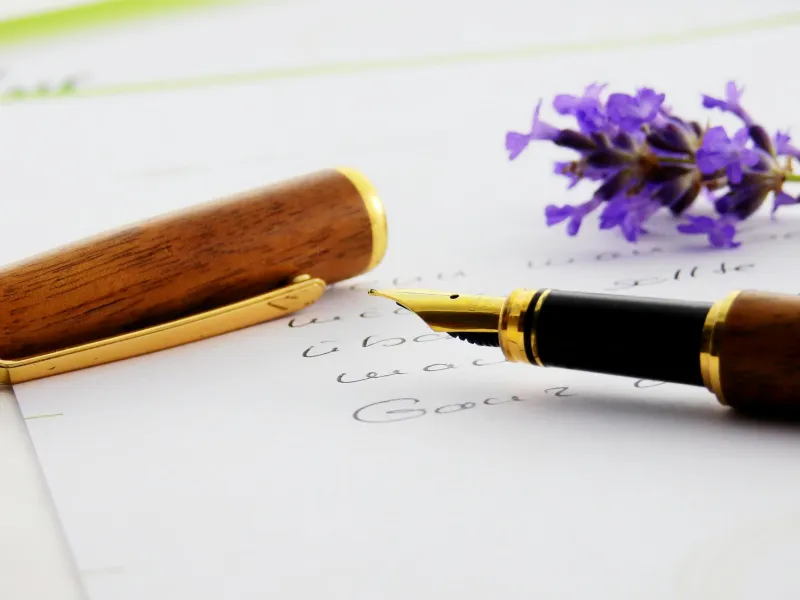
Writing a proper letter was a multi-step process that many Americans treated as a formal occasion. People maintained personal stationery with their names embossed at the top. They kept address books meticulously updated and chose fountain pens or special ballpoint pens reserved specifically for correspondence.
The physical act of writing engaged different parts of the brain than typing. Research now shows that handwriting activates neural pathways that improve memory and comprehension. Letter writers in the 1960s were unknowingly exercising cognitive muscles that digital communication doesn't engage.
What We Lost When Letters Died
By the 1990s, long-distance phone calls had become affordable, and email was beginning to replace written correspondence. The transition seemed natural and beneficial—who wouldn't want instant communication over waiting weeks for a reply?
But something irreplaceable disappeared in that shift. The forced patience of letter writing created space for reflection that instant messaging eliminated. When you knew your next chance to communicate was days away, you made those words count. You shared deeper thoughts, asked more meaningful questions, and invested more emotional energy in each exchange.
Physical letters also created lasting records of relationships. Families kept shoeboxes of correspondence that documented years of shared experiences. These letters became family histories, preserving not just major events but the everyday thoughts and feelings that reveal how people really lived.
The Speed of Modern Loneliness
Today's instant communication paradoxically leaves many Americans feeling less connected than previous generations who waited weeks between conversations. We exchange hundreds of brief messages but rarely engage in the deep, thoughtful communication that letters required.
The average text message contains just 7 words. Compare that to the average personal letter of the 1960s, which typically filled at least one full page with detailed thoughts and carefully chosen words. We've gained speed but lost depth.
A Lost Skill Worth Remembering
The death of letter writing represents more than just technological progress—it marks the end of a communication style that built patience, encouraged deep thinking, and created lasting connections. While we can't return to an era of week-long message delays, understanding what we lost helps explain why so many Americans feel disconnected despite being more "connected" than ever before.
The next time you're tempted to fire off a quick text, imagine instead sitting down with pen and paper, knowing your words will travel for days before reaching their destination. That simple shift in perspective might just change what you choose to say—and how much it means to both you and the person who receives it.