Stepping Aboard in Your Sunday Best: When Air Travel Required Evening Gowns and Three-Course Meals
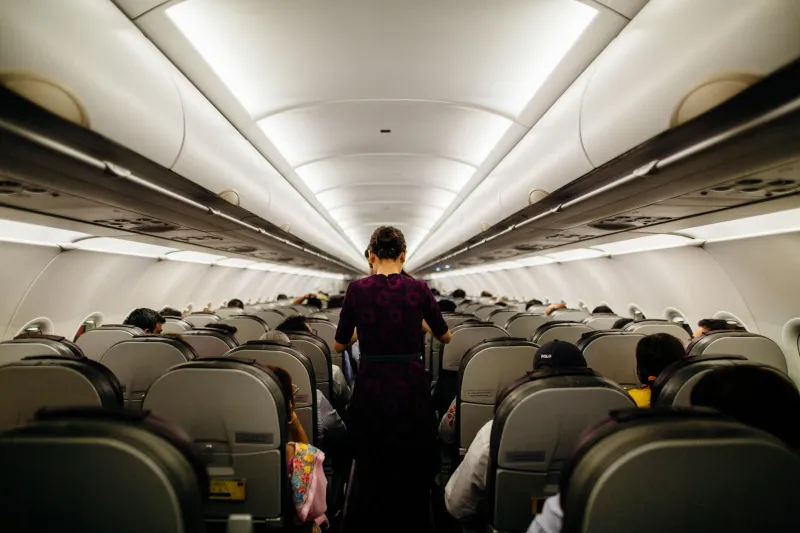
When Taking Flight Meant Getting Dressed Up
Picture this: It's 1958, and you're about to board a TWA flight from New York to Los Angeles. You've spent the morning pressing your best suit, shining your shoes, and making sure your tie is perfectly straight. Your wife has put on her finest dress, complete with gloves and a hat. This isn't a special occasion — this is just what flying looked like when air travel was still considered a miraculous luxury reserved for the wealthy and important.
The ticket in your pocket cost $138, which doesn't sound like much until you realize that's equivalent to about $1,400 in today's money. For a single coach seat. First class? That would set you back the equivalent of nearly $3,000 today. Flying wasn't just expensive — it was a significant financial event that families planned and saved for months in advance.
The Golden Age of Service in the Sky
Once aboard, the experience bore no resemblance to modern air travel. Passengers were treated like honored guests at an exclusive club. Flight attendants, then called stewardesses, were required to be registered nurses, speak multiple languages, and maintain strict appearance standards. They served multi-course meals on real china with actual silverware and cloth napkins.
The menu might include lobster thermidor, prime rib, or duck à l'orange, paired with complimentary cocktails mixed fresh at your seat. Passengers could order multiple drinks without worrying about additional charges, and the galley was stocked like a fine restaurant. Some airlines even employed chefs who prepared meals fresh during the flight.
Seating was spacious by today's standards — what we now call "premium economy" was just regular coach. Passengers had room to stretch out, and many planes featured lounges where travelers could socialize over drinks and conversation. Some aircraft even had piano bars and observation decks.
Why Flying Cost So Much
The astronomical prices weren't just about luxury service — they reflected the true cost of aviation in an era before economies of scale. Airlines flew smaller planes on less frequent schedules, spreading fixed costs across fewer passengers. A typical transcontinental flight might carry 50-80 people, compared to 150-300 on today's aircraft.
Government regulation also kept prices artificially high. The Civil Aeronautics Board controlled routes and fares, preventing airlines from competing on price. This meant carriers had to compete on service quality instead, leading to the white-glove treatment passengers received.
Fuel was relatively cheap, but everything else cost more. Ground crews were larger, maintenance was more labor-intensive, and the planes themselves were less efficient. Airlines employed armies of staff to provide personalized service that would be unthinkable today.
When Airports Were Social Destinations
Even airports reflected aviation's elite status. Terminals were designed like grand hotels, with observation decks where families would spend entire afternoons watching planes take off and land. Getting to the gate didn't require security screenings — anyone could walk right up to the aircraft.
Airports featured upscale restaurants, cocktail lounges, and gift shops selling luxury items. Idlewild Airport (now JFK) had a rooftop restaurant where New Yorkers would dine while watching international flights arrive. The airport experience was part of the journey's appeal, not an obstacle to endure.
The Revolution That Changed Everything
The Airline Deregulation Act of 1978 transformed aviation forever. Suddenly, airlines could set their own prices and choose their own routes. Competition exploded, and carriers discovered they could fill planes by slashing fares and cutting services.
Southwest Airlines pioneered the no-frills model, proving passengers would accept cramped seats and peanuts in exchange for dramatically lower prices. What once cost $1,400 could now be done for $200 or less. Flying became accessible to middle-class families who previously could never afford it.
But something was lost in translation. Airlines stripped away amenities to keep costs down. Meals became snacks, then disappeared entirely on shorter flights. Legroom shrank, seats got narrower, and extra fees appeared for everything from checked bags to aisle seats.
From Privilege to Purgatory
Today's air travel experience would horrify passengers from the 1950s. We accept being herded through security lines, charged for carry-on bags, and squeezed into seats that would have been considered torture devices in aviation's golden age. The average domestic flight now feels more like riding a city bus than the luxurious experience our grandparents knew.
Yet millions more people can afford to fly today. What was once available to perhaps 1% of Americans is now accessible to the majority. A family vacation to Florida or a business trip to Chicago is routine rather than extraordinary.
The transformation of air travel perfectly captures how progress isn't always straightforward. We gained accessibility and affordability but lost comfort and prestige. Flying went from being a special occasion requiring your finest clothes to something you might do in pajama pants and flip-flops.
Looking back, those impeccably dressed passengers of 1958 were witnessing the end of an era they didn't know was ending — when taking flight still felt like touching the sky rather than enduring a necessary inconvenience.