House Calls and Healing Hands: When Your Doctor Was Part of the Family
The Doctor Who Knew Your Middle Name
In 1955, when eight-year-old Tommy Richardson came down with a fever in suburban Cleveland, his mother didn't frantically search for an urgent care clinic or scroll through insurance networks on her phone. She simply called Dr. Henderson's office, and within an hour, the same man who had delivered Tommy, treated his father's broken arm, and helped his grandmother through her final illness was sitting on the edge of Tommy's bed, stethoscope in hand.
 Photo: Dr. Henderson, via www.trulia.com
This wasn't exceptional care reserved for the wealthy. This was simply how medicine worked in America for most of the 20th century.
The Black Bag and the Kitchen Table
Dr. Henderson carried everything he needed in a worn leather medical bag: thermometer, stethoscope, blood pressure cuff, and a collection of medications that could treat most common ailments. More importantly, he carried something that can't be packed in any bag — complete knowledge of three generations of family medical history, stored not in a computer system, but in his memory.
When Tommy's fever spiked to 104 degrees, Dr. Henderson didn't need to review charts or ask about family history. He remembered that Tommy's father had similar high fevers as a child that responded well to specific treatments. He knew that Tommy's mother was prone to anxiety and needed reassurance as much as her son needed medicine. He understood the family's financial situation and could recommend treatments that wouldn't force them to choose between medicine and groceries.
The kitchen table became the examination room, and payment often came in the form of fresh vegetables from the garden or a promise to settle up when the next paycheck arrived.
When Continuity Was Everything
Family doctors didn't just treat illnesses — they prevented them. Dr. Henderson knew that Mr. Richardson worked long hours at the steel mill and might skip meals. He knew that Mrs. Richardson had been showing early signs of depression since her mother's death. He noticed when teenage Sally Richardson started losing weight too quickly, not because of any formal screening protocol, but because he had watched her grow up.
This continuity created a web of care that extended far beyond individual appointments. When Dr. Henderson recommended that the family take a vacation, it wasn't generic advice — he knew their specific stressors, their financial constraints, and what kind of rest would actually help them.
The Specialists Arrive
By the 1970s, everything began to change. Medical knowledge exploded, and it became impossible for one person to stay current on every advancement. Specialists emerged who could diagnose conditions that would have baffled earlier generations. Heart surgery, cancer treatments, and neurological procedures advanced rapidly.
The trade-off was profound. Tommy Richardson, now an adult in the 1980s, found himself shuttling between a cardiologist who knew his heart, an orthopedist who knew his back, and a primary care physician who barely knew his name. Each specialist was undoubtedly more skilled in their area than Dr. Henderson had ever been. But none of them knew that Tommy's family had a history of responding poorly to certain medications, or that his work stress was probably contributing to his blood pressure issues.
The Digital Divide
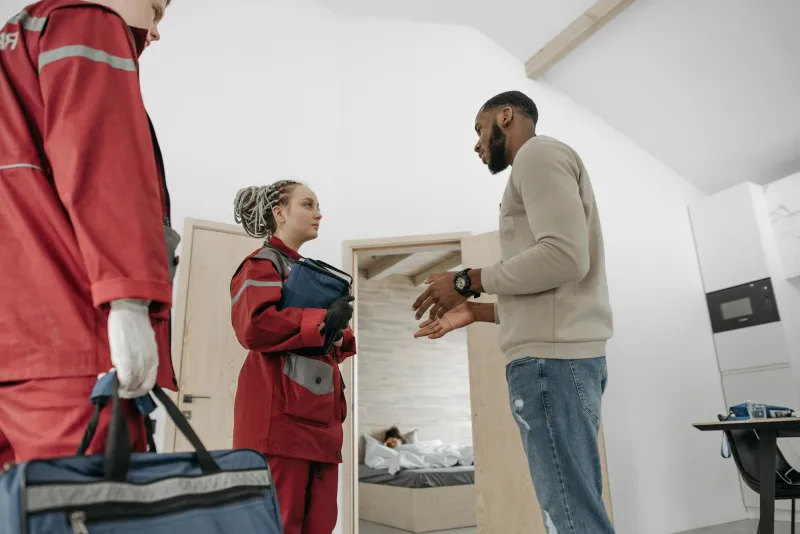
Today's healthcare system would astonish Dr. Henderson. Patients can access test results instantly, schedule appointments online, and consult with physicians via video chat. Medical records follow patients from hospital to hospital, and treatment protocols are based on the latest research rather than one doctor's experience.
Yet something fundamental has been lost. Modern patients often feel like medical tourists, visiting different specialists who see their symptoms but not their lives. The average American sees 18.7 different healthcare providers throughout their lifetime, compared to the 1-3 that previous generations might have known.
What the Numbers Don't Capture
Statistically, Americans live longer and survive diseases that would have killed previous generations. Emergency medicine, surgical techniques, and pharmaceutical advances have revolutionized healthcare in ways that Dr. Henderson could never have imagined.
But statistics don't measure the comfort of having a physician who remembered your mother's maiden name, who knew your fears without you having to explain them, and who understood that sometimes the best medicine was simply the reassurance that came from being truly known.
The Search for Balance
Some modern practices are attempting to recapture elements of the old model. Concierge medicine offers patients more time with fewer doctors, though usually at a premium price. Some healthcare systems are emphasizing continuity of care and training physicians to consider the whole patient, not just their specialty.
Yet the fundamental challenge remains: in an age of incredible medical complexity, is it possible to combine the personal touch of the family doctor with the specialized knowledge that modern medicine demands?
Dr. Henderson's black bag couldn't cure cancer or perform heart surgery. But it carried something that no amount of medical technology has been able to replicate — the healing power of being known, understood, and cared for as a complete human being rather than a collection of symptoms.
In our rush toward medical advancement, we may have forgotten that sometimes the most powerful medicine is the simplest: a doctor who knows your story.