The Dewey Decimal Detective: When Finding Facts Required Real Investigation Skills
The Great Information Hunt
Imagine your doctor mentions a medical condition you've never heard of, and your only option is to drive to the library, hope they're open, and spend the next three hours digging through medical encyclopedias that might be five years out of date. That was reality for Americans just thirty years ago.
In 1990, settling a dinner table argument about which president served the shortest term meant either accepting defeat or planning a trip to the local library the next day. Today, we whip out our phones and have the answer (William Henry Harrison, 31 days) before the salad course arrives.
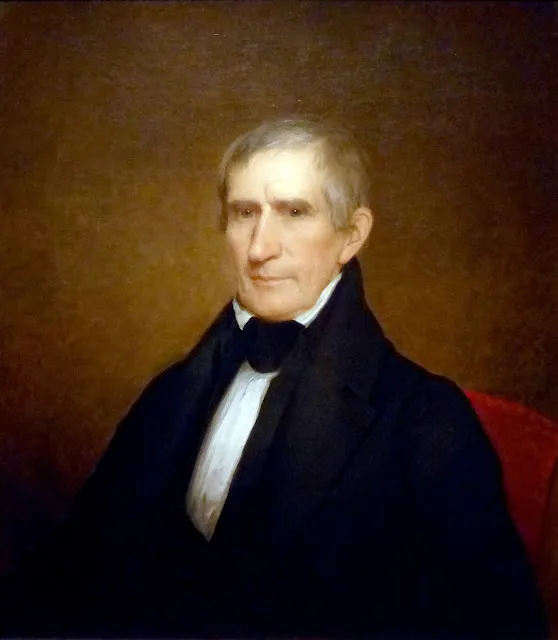 Photo: William Henry Harrison, via 3.bp.blogspot.com
The Card Catalog Cathedral
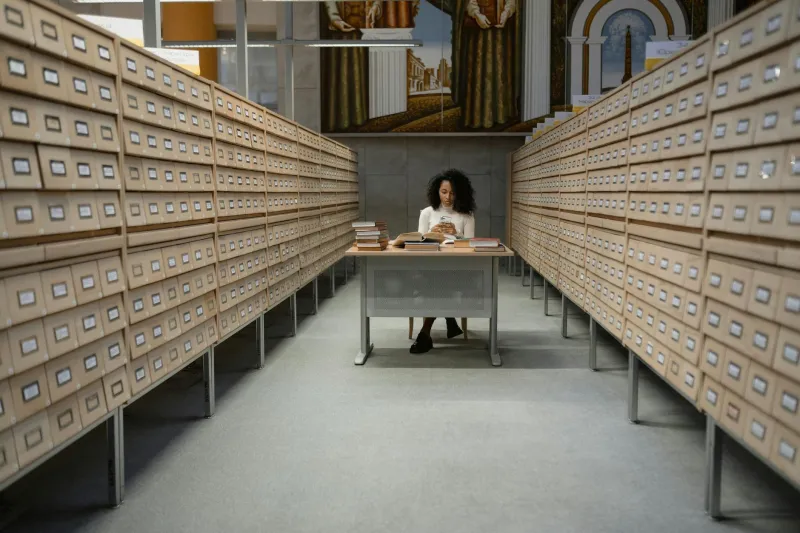
Every public library was built around its card catalog — a massive wooden cabinet filled with thousands of tiny drawers, each containing hundreds of index cards arranged in perfect alphabetical order. These weren't quaint decorations; they were the Google of their time, and using them required actual skill.
Librarians spent years learning the Dewey Decimal System like medical students memorize anatomy. They could navigate from 796.357 (baseball) to 641.5 (cooking) to 629.13 (aviation) faster than most people could walk across the building. Reference librarians weren't just employees — they were human search engines who knew which encyclopedia contained the best maps, which periodicals covered specific topics, and how to track down obscure government documents.
The Encyclopedia Britannica Investment
For middle-class families, owning a set of encyclopedias was like buying a car — a major financial decision that required monthly payments. The Encyclopedia Britannica salesman was a fixture in American suburbs, armed with sample volumes and payment plans that stretched over two years.
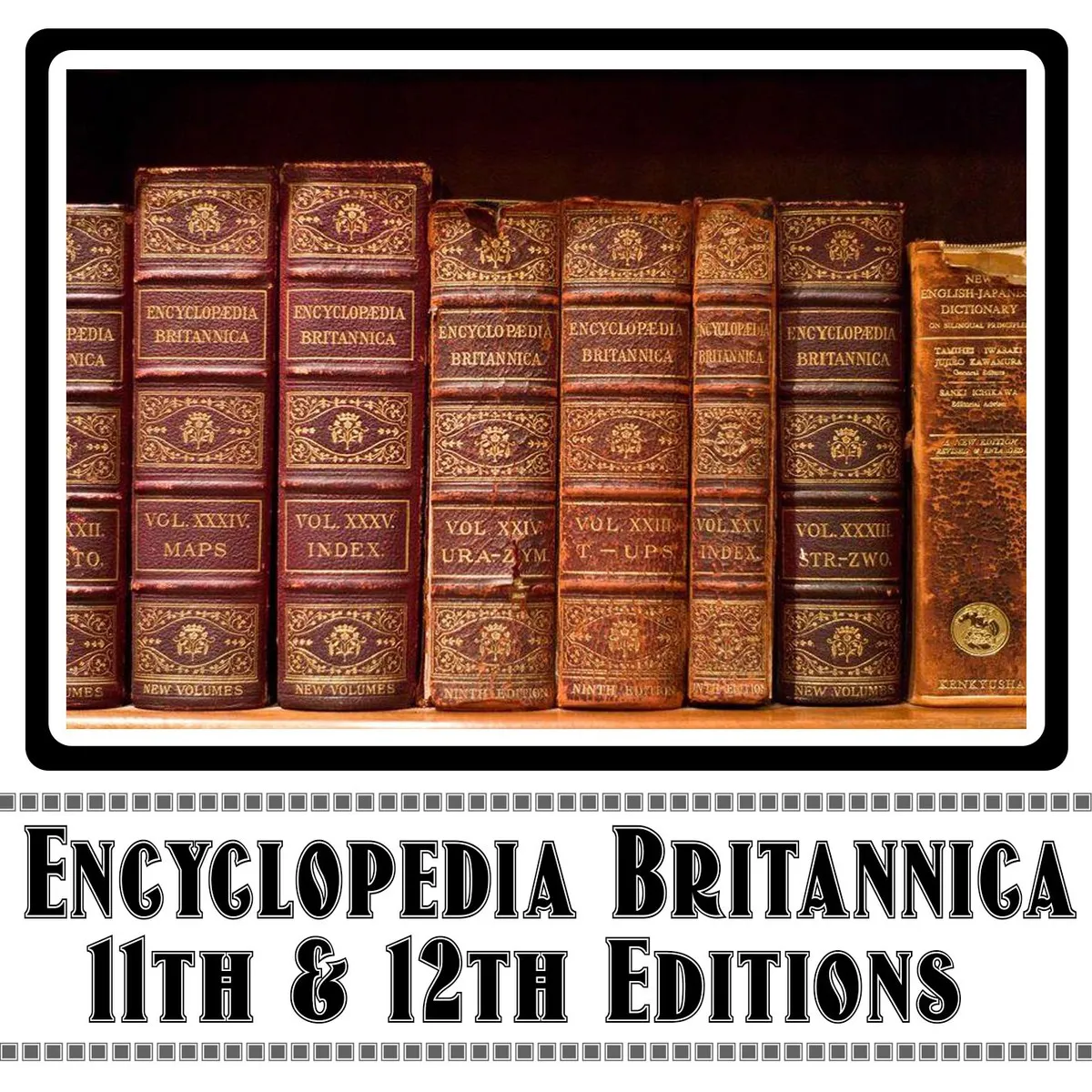 Photo: Encyclopedia Britannica, via i.ebayimg.com
These 32-volume sets cost the equivalent of $4,000 in today's money, and families displayed them prominently in living rooms like status symbols. Children were taught to "look it up" as the solution to every question, turning to Volume P-Q to learn about penguins or Volume S-T for information about space travel.
But here's what we forget: even the newest encyclopedia was already outdated by the time it reached your shelf. Scientific discoveries, political changes, and cultural shifts happened faster than publishing schedules could accommodate.
The Patience of Uncertainty
Perhaps the most profound difference was Americans' relationship with not knowing. If you couldn't find an answer at the library, you simply lived with the question. Dinner party debates could rage for months because nobody could definitively prove whether sharks were mammals or fish.
This uncertainty bred different habits. People collected almanacs, saved newspaper clippings, and maintained personal reference libraries of magazine articles. The phrase "I'll have to look that up" actually meant something — it was a commitment to spend time and effort pursuing knowledge.
The Social Network of Information
Before search engines, finding specialized information often meant finding the right person. Need to know about vintage cars? You tracked down the local car club president. Curious about gardening techniques? You befriended the woman with the best tomatoes in the neighborhood.
Information flowed through human networks. Librarians knew which professor at the local college specialized in Civil War history. Bookstore owners could recommend experts on specific topics. Knowledge was social, requiring conversation and relationship-building in ways that Google searches never will.
The Research Expedition
Writing a high school report meant planning an actual expedition. Students mapped out which libraries to visit, called ahead to confirm they had the needed materials, and allocated entire weekends to information gathering. A paper on World War II might require trips to three different libraries, plus interviews with local veterans.
College students became masters of interlibrary loans, waiting weeks for books to arrive from other institutions. Graduate students planned research trips like military operations, knowing they might have only one chance to access rare documents in distant archives.
What We Lost in Translation
Today's instant access to information has eliminated the friction that once made knowledge feel valuable. When answers required effort, we remembered them differently. The Civil War battle you spent two hours researching stayed with you longer than the same fact discovered in a three-second Google search.
We also lost the serendipity of discovery. Browsing through card catalogs and wandering library stacks led to unexpected connections. Looking up information about whales might lead you to discover books about ocean exploration, which might introduce you to stories about shipwrecks. Google's algorithmic precision eliminates those happy accidents.
The Democracy of Difficulty
The old system was frustratingly slow but beautifully democratic. Rich and poor Americans had equal access to their local library's resources. A farmer in rural Kansas could access the same Encyclopedia Britannica as a Manhattan executive — they just had to make the trip to town.
Librarians served as information equalizers, helping everyone from elementary students to PhD candidates navigate the same resources. The playing field wasn't level — urban libraries had more resources than rural ones — but within each community, knowledge was a shared public resource.
The Long View
When finding information required real effort, Americans developed different relationships with facts, experts, and uncertainty. We trusted librarians because they'd proven their expertise through years of helping us find answers. We valued encyclopedias because we'd paid for them and used them regularly.
Today's information abundance has solved the problem of access while creating new challenges around accuracy, authority, and attention span. We can find any fact instantly, but we've lost the patience for deep research and the satisfaction of a difficult question finally answered.
The Dewey Decimal System still exists in libraries across America, but it's become a backup system in a world where most questions get answered before we even think to ask them properly.