Picture this: it's Tuesday morning in 1952, and while you're drinking your coffee, you're already planning Thursday's pot roast because the meat needs to thaw for two full days in your refrigerator. This wasn't overthinking—this was survival in an American kitchen before convenience foods turned cooking from a full-time job into an afterthought.
The Morning Strategy Session
Every day began with menu planning that would make today's meal-prep enthusiasts look casual. Housewives—and it was almost exclusively housewives—started each morning by mentally mapping out not just that day's meals, but the next several days' worth of food preparation. The reason was simple: nothing happened quickly in a 1950s kitchen.
Meat came frozen solid from the butcher and required 24-48 hours of thawing time, depending on size. Vegetables were fresh or canned—frozen vegetables existed but were expensive and limited in variety. If you wanted green beans for dinner, you either opened a can or spent 20 minutes snapping fresh ones by hand. There was no middle ground.
The refrigerator itself was a planning constraint. Most families owned models with tiny freezer compartments that could barely hold a few ice cube trays and maybe a small roast. This meant shopping every few days and careful coordination of perishables. Running out of milk on Wednesday meant someone was walking to the corner store, not grabbing a gallon during the next grocery run.
The Afternoon Production Line
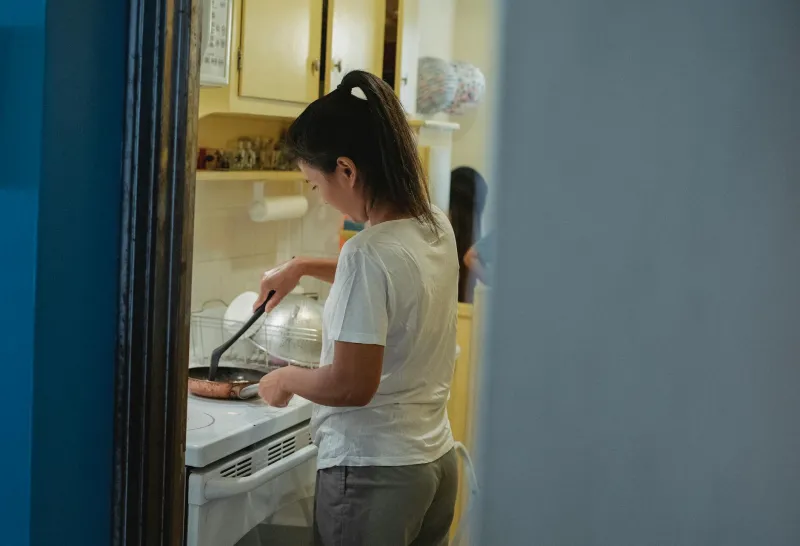
By modern standards, preparing a typical family dinner in 1950 looked like running a small restaurant. Everything was made from scratch because there weren't alternatives. Mashed potatoes meant peeling, boiling, and mashing actual potatoes. Gravy required making a roux from flour and fat, then slowly whisking in liquid until it reached the right consistency. Even something as simple as salad dressing meant combining oil, vinegar, and seasonings by hand.
The timing was crucial and unforgiving. Most families owned a single oven and four-burner stovetop, which meant orchestrating multiple dishes like a conductor managing an orchestra. The pot roast needed to start cooking at 3 PM to be ready by 6. The potatoes went on at 5:15. The vegetables at 5:45. Miss your timing by fifteen minutes, and dinner was either late or ruined.
Consider what this meant for working mothers—except there weren't many. The demands of home cooking were so intensive that maintaining both a career and a family dinner table required either exceptional organization or accepting that something would suffer. Most families made the practical choice: mom stayed home and treated cooking as her profession.
When Things Went Wrong
The fragility of 1950s meal preparation would terrify modern families accustomed to backup plans. If the pot roast turned out tough, there was no calling for pizza delivery. If you forgot to start dinner early enough, the family ate late or went hungry—restaurants were for special occasions, not Tuesday night emergencies.
Power outages were particularly devastating. Without electric can openers, microwave defrosting, or even reliable refrigeration, a storm that knocked out electricity for more than a few hours could destroy days' worth of meal planning. Smart families kept manual can openers and learned to cook on gas stoves even when the electric ignition failed.
The psychological pressure was intense. A mother's competence was measured largely by her ability to consistently produce satisfying meals under these constraints. Dinner wasn't just nutrition—it was daily proof of domestic success or failure, witnessed by the entire family.
The Revolution in a Box
The transformation began slowly in the 1960s with convenience foods that seem primitive now but felt revolutionary then. TV dinners, introduced in 1953, offered complete meals that cooked in 25 minutes. Instant mashed potatoes eliminated the peeling and mashing. Cake mixes turned baking from a day-long project into an afternoon activity.
Each convenience represented time liberation. What had taken three hours could now be accomplished in one. What required advanced planning could be decided that afternoon. The mental load of meal planning—that constant background calculation of timing and logistics—began to lift.
The microwave oven, mass-produced starting in the early 1970s, completed the revolution. Suddenly, frozen foods could be transformed into hot meals in minutes. Leftovers became viable dinner options instead of tomorrow's lunch ingredients. The rigid timing that had governed kitchen life for generations became optional.
Today's Kitchen Reality
Modern Americans have choices that would have seemed magical to 1950s families. Grocery stores stock pre-cut vegetables, pre-marinated meats, and complete meal kits that eliminate most preparation time. Restaurants deliver to your door. Meal replacement shakes can substitute for cooking entirely.
The time investment has flipped completely. Where families once spent 4-5 hours daily on meal-related activities, today's average is under 90 minutes—and much of that is cleanup, not preparation. The microwave, food processor, and convenience foods didn't just change what Americans eat; they fundamentally altered how families structure their days.
The Unintended Consequences
This convenience came with trade-offs that weren't immediately obvious. Families lost the shared rhythm of meal preparation that had anchored daily life for generations. Children stopped learning basic cooking skills because they weren't needed for family survival. The dinner table, once the guaranteed gathering point for family conversation, competed with individual schedules and entertainment options.
Nutrition became more complicated, not simpler. When cooking required significant effort, meals were planned around basic food groups and seasonal availability. Convenience foods introduced processing, preservatives, and nutritional trade-offs that families were unprepared to evaluate.
Looking Back at the Labor
It's easy to romanticize 1950s home cooking—the from-scratch meals, the family gathered around a table laden with homemade food. But the reality was exhausting daily labor that consumed enormous amounts of time and mental energy. Modern convenience didn't just make cooking easier; it made careers outside the home possible for millions of women who had been tethered to their kitchens by the simple necessity of keeping their families fed.
The next time you microwave leftovers or order takeout on a busy weeknight, consider what that meal represents: freedom from the all-consuming daily production that once defined American family life. Convenience foods didn't just change dinner—they gave families back half their day to spend on everything else.