Walk through any American office building at noon today, and you'll see the modern lunch ritual: workers hunched over keyboards, eating salads from plastic containers while scanning emails. The lucky ones might grab fifteen minutes in a break room before diving back into their screens. This scene would have been incomprehensible to American workers just fifty years ago.
When Lunch Meant Leaving
In 1970, the lunch hour wasn't a suggestion—it was a workplace institution as fixed as the morning commute. At 12:00 PM sharp, offices across America emptied as workers headed to corner diners, cafeterias, or local restaurants. The idea of eating at your desk wasn't just uncommon; it was considered unprofessional, almost antisocial.
Factory workers heard the lunch whistle and put down their tools completely. Office workers covered their typewriters and walked out the door. Even executives left their corner offices to join colleagues at nearby establishments. The lunch hour belonged to the worker, not the workplace.
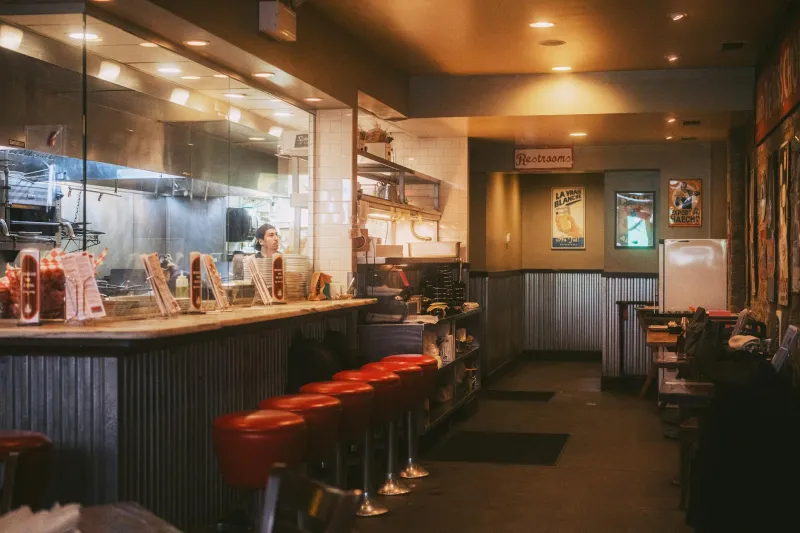
Restaurants built their entire business models around this predictable midday rush. Diners served "lunch counters" specifically designed for working people who had exactly one hour to eat, socialize, and mentally reset. Waitresses knew their regular customers' orders by heart, and conversations flowed freely between strangers sharing adjacent stools.
The Ritual of Disconnection
What made the traditional lunch hour remarkable wasn't just the food—it was the complete mental break from work. Without cell phones, laptops, or instant messaging, leaving the office meant genuinely leaving work behind. Conversations centered on family, local news, sports, or weekend plans. Work problems stayed at work.
This daily ritual served as a pressure valve for workplace stress. Workers returned to their desks refreshed, having spent an hour in different surroundings with different people discussing different topics. The lunch hour functioned as a daily reminder that work was just one part of life, not its entirety.
Many friendships formed over shared lunch counters. Romance bloomed in restaurant booths. Business deals were struck over coffee and pie. The lunch hour created a social fabric that extended far beyond the workplace, connecting Americans across different companies, industries, and backgrounds.
How Everything Changed
The erosion of the lunch hour didn't happen overnight. It began in the 1980s as corporate culture shifted toward "efficiency" and "productivity." The rise of personal computers meant work could follow employees anywhere. Email created an expectation of constant availability. The lunch hour gradually transformed from protected time into "flexible time."
By the 1990s, many companies began encouraging "working lunches"—meetings disguised as meals that kept employees technically on the clock. The dot-com boom of the late 1990s introduced the concept of free office food, which seemed generous but actually eliminated the need to leave the building entirely.
Today's workplace culture treats lunch as an inefficiency to be minimized. Many employees feel guilty about taking a full hour away from their desks. The phrase "I'll just grab something quick" has replaced "I'm going to lunch." Remote work has made the situation even more extreme—home-based workers often skip lunch entirely or eat while attending video meetings.
What We Lost Along the Way
The disappearance of the traditional lunch hour reflects a broader shift in how Americans view work-life balance. When lunch was sacred, it reinforced the idea that employees were human beings with needs beyond productivity. Today's desk-eating culture treats workers more like machines that require fuel to keep running.
Research consistently shows that taking real breaks—especially midday breaks away from work environments—improves both mental health and actual productivity. Yet American workers increasingly treat lunch as another task to optimize rather than time to recharge.
The social connections formed during traditional lunch hours also served important functions. They created informal networks that helped people find new jobs, learn about opportunities, and build relationships that enriched both professional and personal lives. Today's isolated eating habits eliminate these chance encounters and casual conversations.
The Modern Reality
Today's American workers face a paradox: we have more food options than ever before, delivered faster than previous generations could imagine, yet we've lost the time and space to actually enjoy meals. Food delivery apps bring restaurant-quality meals directly to office buildings, but workers eat them while staring at screens, checking notifications, and planning their next meeting.
The few remaining traces of traditional lunch culture—like food trucks or office cafeterias—often feel rushed and transactional. The leisurely pace that once defined the lunch hour has been replaced by efficiency metrics and productivity tracking.
Some progressive companies have begun recognizing this problem, implementing "no-meeting" lunch hours or creating dedicated spaces for actual breaks. But these efforts remain exceptions in a culture that increasingly views any non-productive time as waste.
Looking Back to Move Forward
The sacred lunch hour of previous generations wasn't just about food—it was about preserving humanity in the workplace. It recognized that people need time to decompress, connect with others, and remember that work is a means to an end, not an end in itself.
As American workers grapple with unprecedented levels of burnout and workplace stress, perhaps it's time to reconsider what we lost when we gave up our lunch hours. The workers of 1970 understood something we've forgotten: sometimes the most productive thing you can do is stop producing entirely, if only for an hour.