Reading the Sky: When Tomorrow's Weather Was Anyone's Guess
On June 5, 1944, General Dwight Eisenhower faced an impossible decision. The largest military invasion in history hung on a single question that no technology could answer with certainty: What would the weather be like over the English Channel in 24 hours? His meteorologists offered their best guess based on barometric readings and cloud observations, but they were essentially reading tea leaves. The fate of World War II—and thousands of lives—depended on interpreting signs in the sky that had fooled humans for millennia.
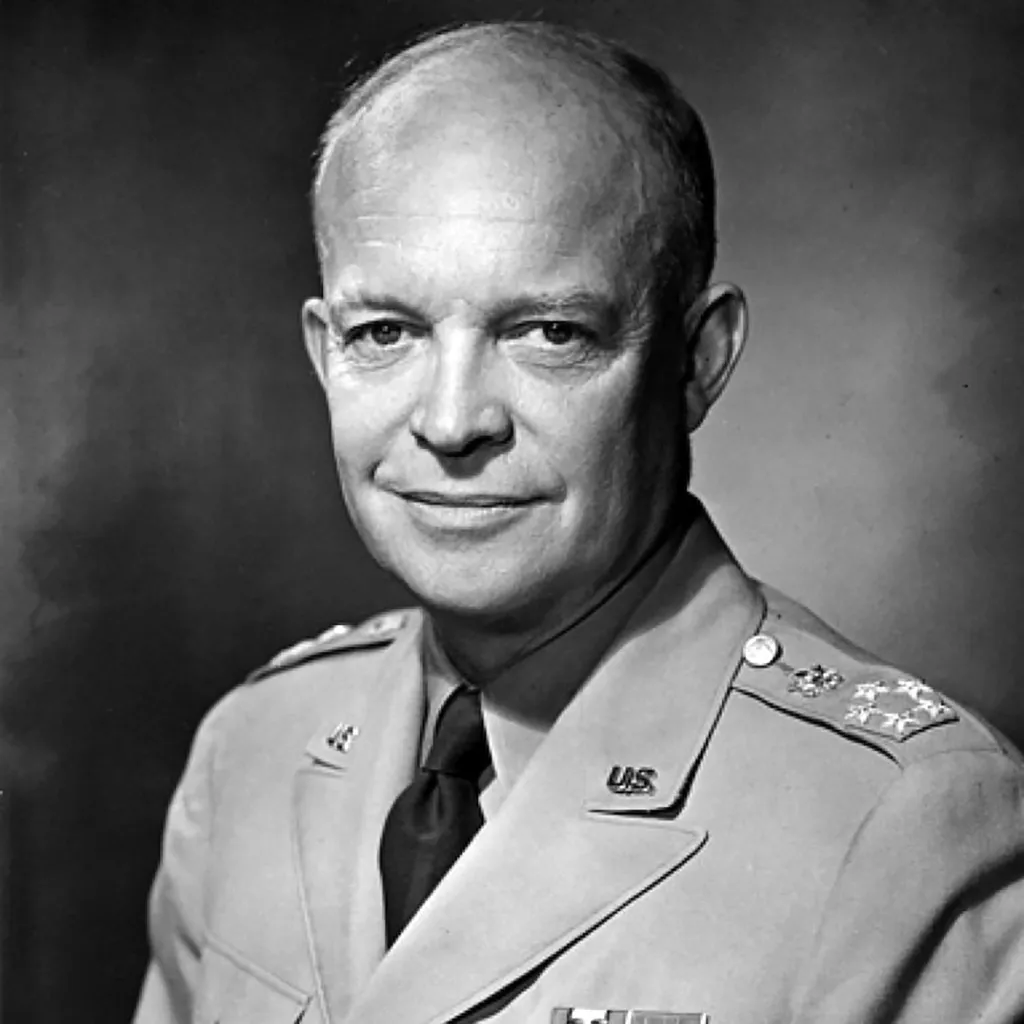 Photo: General Dwight Eisenhower, via www.historylink.org
Eisenhower postponed D-Day by one day based on that weather guess. It proved correct, but it could just as easily have been catastrophically wrong. In 1944, weather prediction beyond 12 hours was more art than science, more hope than knowledge.
When Farmers Bet Everything on the Morning Sky
For most of human history, weather wasn't something you checked—it was something you felt, smelled, and intuited based on generations of accumulated wisdom. American farmers in the 1800s and early 1900s made crucial planting and harvesting decisions by studying cloud formations, wind patterns, and the behavior of animals. A red sunrise might delay planting for a week. Unusual bird migrations could trigger an early harvest that saved or destroyed an entire year's income.
The Farmers' Almanac, first published in 1818, became America's weather bible not because it was accurate—it wasn't particularly—but because it was all farmers had. Its long-range forecasts, based on astronomical calculations and historical patterns, gave agricultural communities something to plan around, even when those plans proved spectacularly wrong.
Consider what this meant for a wheat farmer in Kansas in 1890. He might decide when to plant 500 acres based on the phase of the moon, the thickness of squirrel fur, or his grandfather's observations about spring wind patterns. There was no seven-day forecast, no satellite imagery, no radar showing approaching storms. Success or failure often depended on reading natural signs that modern Americans have completely forgotten how to interpret.
The Art of Weather Wisdom
Before meteorology became a science, Americans developed an intricate folklore of weather prediction. "Red sky at night, sailor's delight; red sky at morning, sailors take warning" wasn't just a rhyme—it was practical navigation advice based on centuries of observation. "When smoke descends, good weather ends" helped farmers time their outdoor work. "If three nights dewless there be, rain will certainly be" guided planting decisions across the rural South.
These sayings worked often enough to persist, but they failed often enough to create constant uncertainty. A sea captain in 1850 might delay departure from Boston because the cats were acting strangely, only to miss favorable winds for a week. A cotton farmer might rush to harvest because the ants were moving to higher ground, then watch his crop sit perfectly dry for another month.
The psychological impact of this uncertainty was profound. People lived with the constant awareness that tomorrow's weather could destroy their plans, their crops, or their lives. There was no Weather Channel app to check, no hourly updates, no advance warning of severe storms. Weather happened to you; you didn't prepare for it beyond basic seasonal expectations.
When Storms Arrived Without Warning
The Galveston Hurricane of 1900 killed over 8,000 people partly because residents had no advance warning. Weather observers noticed disturbing barometric pressure readings and unusual wave patterns, but they couldn't predict the storm's path or intensity. Galveston residents went to bed on September 7 knowing a storm was approaching somewhere in the Gulf of Mexico. They woke up to one of the deadliest natural disasters in American history.
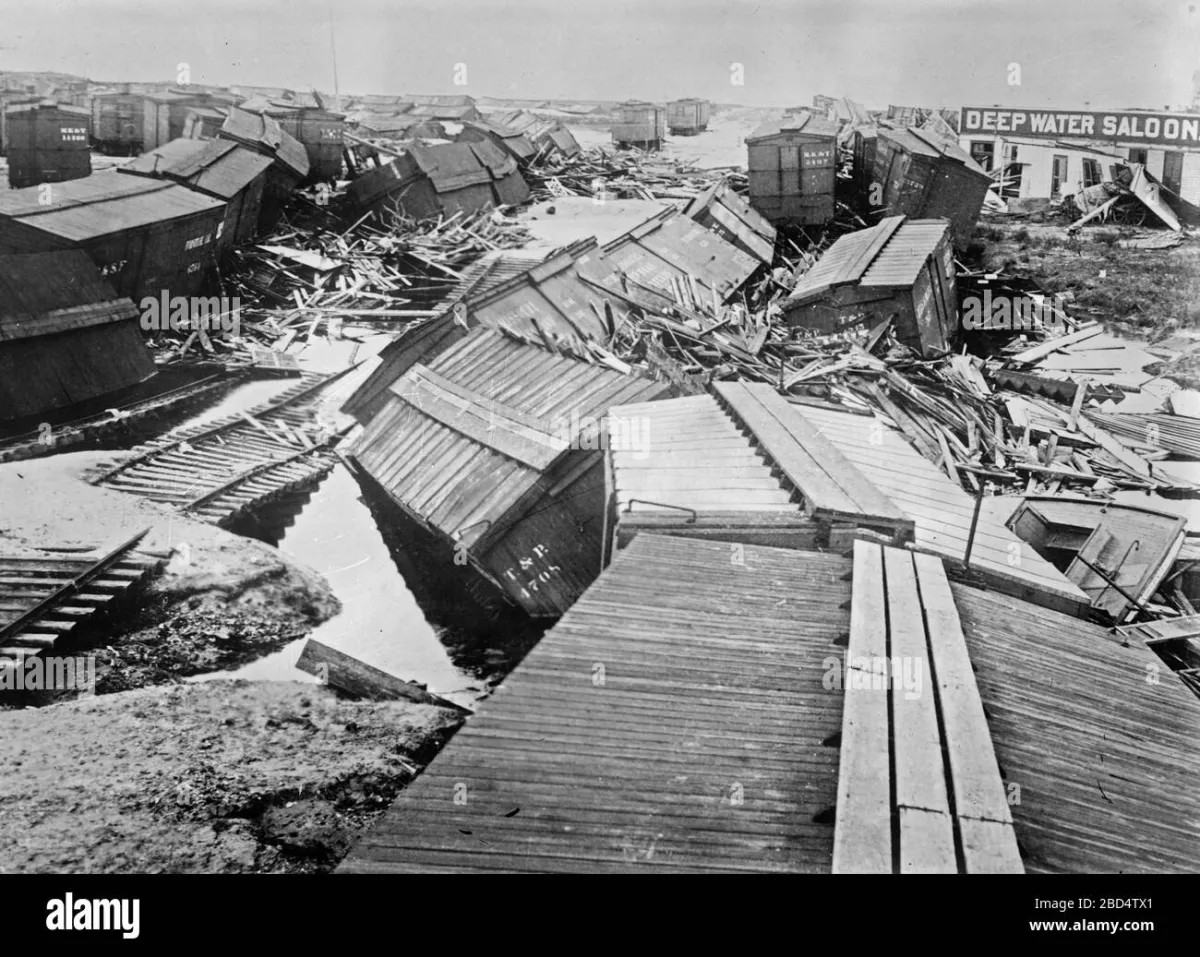 Photo: Galveston Hurricane of 1900, via c8.alamy.com
Compare that to Hurricane Katrina in 2005. Despite the devastating aftermath, the storm itself surprised no one. Meteorologists tracked Katrina for days, predicted its path with remarkable accuracy, and warned residents to evacuate well in advance. The disaster was a failure of preparation and response, not prediction.
The 1888 "Children's Blizzard" across the Great Plains caught families completely off guard. Children walked to school on a mild January morning and found themselves trapped in whiteout conditions by afternoon. Many froze to death trying to walk home distances that seemed manageable in clear weather. Their parents had no way to know that a massive Arctic front was racing south at unprecedented speed.
Navigation by Guess and Prayer
Sea captains and early aviators lived in a world where weather could appear without warning and disappear just as quickly. Ships carried barometers and captains learned to read wind patterns, but they often sailed into storms they couldn't see coming or avoided good weather because the signs looked threatening.
Charles Lindbergh's 1927 transatlantic flight required weather decisions that would terrify modern pilots. He consulted with meteorologists in New York who gave him their best assessment of North Atlantic conditions, but they were essentially guessing about weather patterns over 3,000 miles of ocean. Lindbergh took off based on incomplete information and flew through weather systems that no one had predicted or could track.
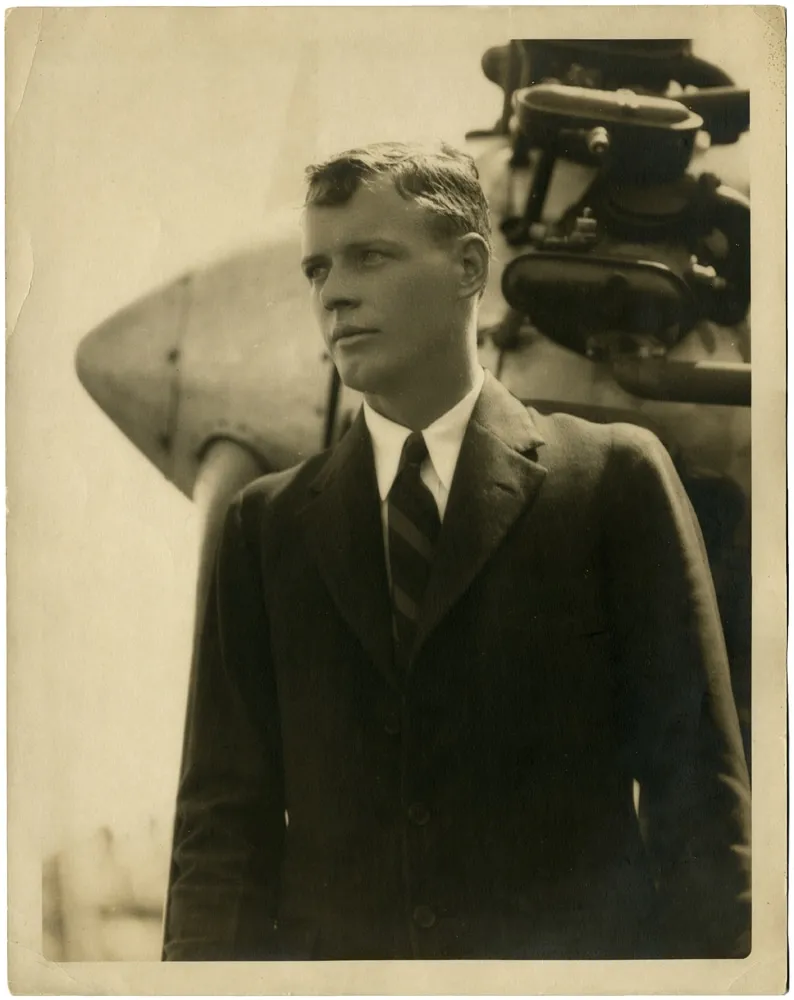 Photo: Charles Lindbergh, via www.photo-memory.eu
Commercial aviation was even more vulnerable. Early airlines canceled flights based on local observations and pilot intuition. A TWA flight might sit on the ground in Chicago because the pilot didn't like the look of clouds to the west, even though conditions in New York—the destination—were perfect. There was no way to know what weather lay between departure and arrival.
The Revolution You Don't Notice
Today's weather prediction is so reliable that we complain when forecasts are wrong by a few degrees or when rain arrives an hour earlier than expected. We check hourly forecasts, plan outdoor events days in advance, and receive automatic severe weather alerts on our phones. The seven-day forecast is more accurate today than the 24-hour forecast was in 1950.
Satellites show us storms forming over the Pacific that won't reach California for a week. Doppler radar reveals tornado formation in real time. Computer models process millions of data points to predict weather patterns with precision that would have seemed magical to Americans just 75 years ago.
This transformation happened gradually enough that most people don't realize how recently weather was truly unpredictable. Your grandparents likely remember when weather forecasts were vague suggestions rather than detailed predictions. They remember planning outdoor weddings with genuine uncertainty about whether it would rain.
What We Gained and Lost
Modern weather prediction has eliminated much of the anxiety and economic uncertainty that dominated previous generations. Farmers can time planting and harvesting with precision. Airlines operate safely in conditions that would have grounded flights for days in 1940. Emergency managers evacuate coastal areas days before hurricanes arrive.
But we've also lost something harder to measure: the humility that comes from acknowledging how little we can control. Previous generations lived with constant awareness that nature could disrupt their plans without warning. They built flexibility into their expectations and developed resilience when weather destroyed their crops, delayed their travel, or changed their lives in ways no app could predict.
They also developed observational skills that modern Americans have completely abandoned. Few people today can read cloud formations, interpret wind patterns, or smell approaching rain. We've gained certainty and lost the ancient human ability to read the natural world.
The next time your weather app tells you exactly when rain will start and stop in your specific location, remember that this precision is less than a lifetime old. Your parents likely remember when checking the weather meant looking outside and making their best guess about what the sky was trying to tell them. They lived in a world where tomorrow's weather was truly anyone's guess, and somehow, they managed just fine.