The Voice That Connected America
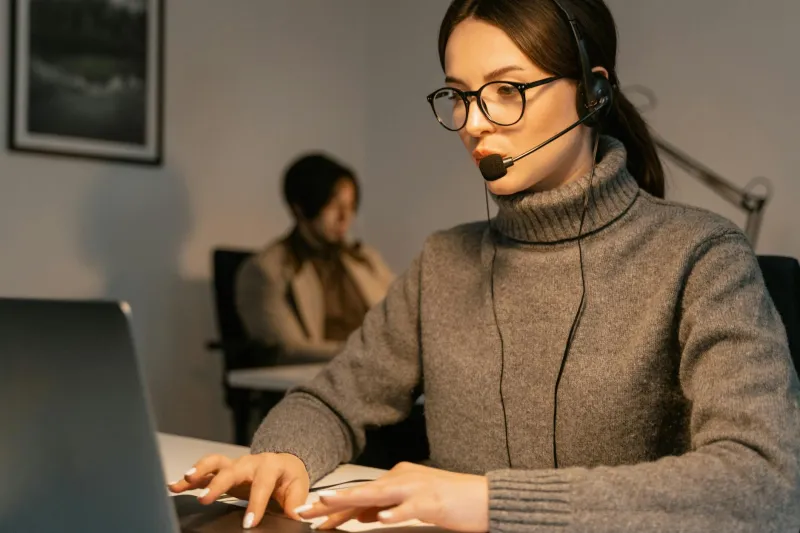
"Number please?" These two words were as familiar to early 20th century Americans as "Can you hear me now?" is today. Before you could speak to your grandmother in the next town, your boss across the city, or your sweetheart at college, you first had to convince a complete stranger—the telephone operator—to make the connection for you.
From the telephone's invention in 1876 through the gradual rollout of direct dialing in the 1950s and 60s, every single phone call in America began with human intervention. You'd lift the receiver, wait for the operator's voice, and then politely request to be connected to your desired number. No call was private from the very first moment.
The Switchboard Symphony
Behind that familiar "Number please?" sat rows of women (and they were almost exclusively women) at massive switchboards that looked like the control panels of spaceships. These operators worked with lightning speed, plugging and unplugging cables into boards filled with hundreds of small holes, each representing a different phone line in their coverage area.
The job required remarkable skill. Operators memorized thousands of phone numbers, recognized regular callers by voice, and could connect calls while simultaneously handling multiple other conversations. In small towns, the operator often knew everyone's number by heart and could route calls even when callers said, "Connect me to the Miller farm" instead of providing an actual number.
 Photo: Miller farm, via images.squarespace-cdn.com
Party Lines and Shared Secrets
If having an operator listen to the start of every call wasn't intimate enough, many Americans also shared "party lines"—single phone circuits used by multiple households. Your phone might ring with a specific pattern (two long rings and a short one, for example) to indicate the call was for you, but anyone else on that line could pick up their phone and listen to your entire conversation.
Party line etiquette became a crucial social skill. You were supposed to hang up if you accidentally picked up during someone else's call, but enforcement relied entirely on the honor system. Neighborhood gossip often traveled faster through party line eavesdropping than through any other means. Some people developed elaborate codes or spoke in vague terms to maintain privacy, while others simply accepted that their conversations were community entertainment.
The Ritual of Long Distance
Local calls might be handled quickly, but long-distance calls were elaborate productions. You'd tell the operator you wanted to place a long-distance call, provide the city and number, and then wait—sometimes for hours—while operators in multiple cities worked together to establish the connection across state lines.
Long-distance calls were expensive enough that families planned them like special events. You'd gather everyone around the phone, prepare a list of topics to discuss, and speak quickly to minimize the cost. The operator would often come back on the line during the call to announce "Three minutes," reminding you that the meter was running. Some families would write letters first, then read them aloud during their precious long-distance minutes.
When Operators Knew Your Business
In smaller communities, telephone operators became unofficial information centers. Need to know if the doctor was making house calls today? The operator probably knew. Wondering if the general store had received its shipment? She'd heard that conversation earlier. Operators often connected emergency calls to doctors or fire departments, sometimes staying on the line to coordinate help.
This intimate knowledge came with responsibility. Professional operators maintained strict confidentiality about what they overheard, but they were still human beings processing hundreds of personal conversations daily. The boundary between public and private communication was fundamentally different when every call required human assistance.
The Death of Small Talk
The operator system created a unique rhythm to American conversation. Calls began formally—you had to clearly state your request to a stranger—but then shifted to intimacy once connected. There was no casual dialing; every call required intention and effort. You couldn't mindlessly scroll through contacts or pocket-dial someone by accident.
This friction made phone conversations more purposeful. People wrote down what they wanted to discuss before calling. Conversations had clear beginnings, middles, and ends. The effort required to connect meant you didn't call unless you had something meaningful to say.
The Revolution of Direct Dialing
When direct dialing finally arrived in most American cities during the 1950s and 60s, it felt like science fiction. You could simply pick up the phone, dial a number, and be connected automatically—no human intervention required. Phone companies launched massive advertising campaigns teaching Americans how to dial numbers themselves, complete with jingles and demonstrations.
The transition wasn't immediate or smooth. Many Americans, particularly older residents, continued requesting operator assistance for years after direct dialing became available. Some missed the personal touch and felt lost without the familiar voice guiding their calls. Others worried about making mistakes without an operator to verify the number.
What We Lost in the Lines
The shift from operator-assisted to direct dialing eliminated thousands of jobs, but it also erased a uniquely human element from communication. The operators weren't just switchboard technicians—they were the first voice you heard when reaching out to connect with someone else. They provided reassurance, assistance, and sometimes comfort to callers who were nervous, elderly, or dealing with emergencies.
Today's instant, private, global communication would seem miraculous to Americans who once had to convince an operator that their call was worth making. Yet something was lost when we gained the ability to connect instantly and anonymously. The operator's "Number please?" was a reminder that communication is fundamentally about human connection—and that every conversation, no matter how private we think it is, depends on someone else helping us reach across the distance.