One Night Only: When Music Vanished Into Thin Air
The Sound of Silence
In 1870, if you missed Jenny Lind's concert in your town, you missed it forever. There was no recording, no radio broadcast, no YouTube video to watch later. The Swedish Nightingale's legendary voice existed only in the memory of those lucky enough to be in the concert hall that particular evening.
 Photo: Jenny Lind, via c8.alamy.com
This wasn't just inconvenient — it was economically devastating for both artists and audiences. Music was the ultimate perishable commodity, more fleeting than fresh fruit or daily newspapers. A performance could only be consumed once, by the people physically present, creating a scarcity that made live music incredibly valuable and frustratingly inaccessible.
The Geography of Musical Privilege
Living in New York, Boston, or Philadelphia meant access to world-class performers who toured the established cultural circuits. But if you lived in rural Nebraska or small-town Georgia, professional music was as foreign as European cuisine. The economic reality was stark: great musicians couldn't afford to travel to small markets, and small towns couldn't afford to pay enough to attract great musicians.
This geographic lottery determined your entire musical education. Urban Americans heard symphonies, operas, and touring virtuosos. Rural Americans made do with local church choirs, traveling minstrel shows, and whatever music they could create themselves. The gap between these experiences was enormous — like comparing a gourmet restaurant to whatever you could grow in your backyard.
The Economics of Ephemeral Art
Professional musicians faced a brutal economic reality: they could only earn money when they were physically performing. A pianist couldn't leverage their talent beyond the number of hours they could actually play. This created a strange economy where the most talented artists were often the poorest, since they could only be in one place at one time.
Concert promoters took enormous financial risks. They had to guarantee payment to artists before knowing whether audiences would show up. Bad weather, competing events, or simply poor marketing could turn a concert into a financial disaster. Unlike today's entertainment industry, there were no secondary revenue streams — no album sales, streaming royalties, or merchandise to offset a disappointing live performance.
The Democratization Revolution
Thomas Edison's phonograph, patented in 1877, changed everything by making music a product that could be manufactured, distributed, and consumed repeatedly. Suddenly, a performance could be "captured" and sold thousands of times, fundamentally altering the economics of music.
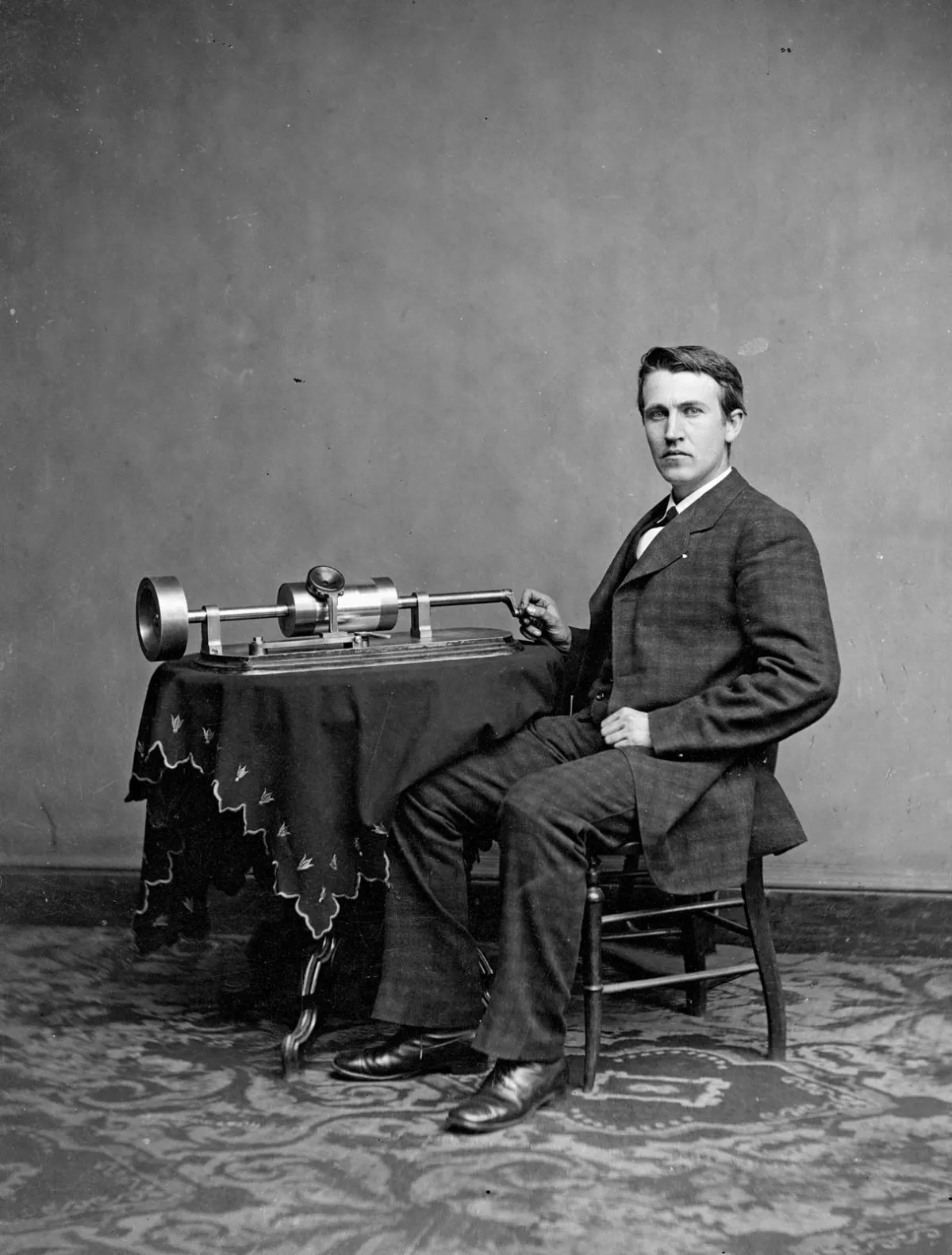 Photo: Thomas Edison, via cdn.britannica.com
The first commercial recordings were expensive luxury items. A single Edison cylinder cost the equivalent of $50 in today's money, and the playback machines cost as much as a small car. But even at these prices, the demand was enormous because people were hearing professional music for the first time in their lives.
The Multiplication of Musical Wealth
Recorded music created entirely new economic opportunities. A single recording session could generate income for decades through repeated sales. Musicians could now earn money while sleeping, traveling, or even after death — concepts that would have been incomprehensible to earlier generations of performers.
Record companies became the new middlemen, investing in recording technology and distribution networks. They could take financial risks on unknown artists because successful recordings could be sold indefinitely. This economic model funded the development of new musical genres and supported experimental artists who might never have found live audiences.
The Transformation of Musical Value
Before recordings, music's value came from its scarcity and the skill required to create it live. After recordings, music's value shifted to its ability to be reproduced and distributed. This fundamentally changed what we were willing to pay for.
Live performances had commanded premium prices because they were irreplaceable experiences. Recorded music was cheaper per listen but could be enjoyed repeatedly. This trade-off — paying less for individual access but gaining unlimited repetition — reshaped how Americans budgeted for entertainment.
The Birth of Musical Mass Market
Recordings created America's first truly national musical culture. Before Edison, regional musical styles remained geographically isolated. After recordings, a blues song recorded in Mississippi could influence musicians in Minnesota. This cross-pollination accelerated musical innovation and created new hybrid genres.
The economic impact was massive. Record sales created new industries: recording studios, pressing plants, distribution networks, and retail stores. Radio stations emerged as promotional platforms that could reach millions of potential customers simultaneously. The music industry became a major economic sector employing thousands of people beyond just the performers.
The Investment in Musical Infrastructure
Families began investing in home music systems the way previous generations had invested in pianos. A quality phonograph and record collection represented significant household spending — often hundreds of dollars in equipment and dozens of records costing several dollars each.
This investment changed home life fundamentally. Families could now afford to own the same music that once required expensive concert tickets. Children grew up hearing professional-quality performances daily, raising musical literacy and creating more sophisticated audiences.
The Economics of Musical Memory
Recordings solved the economic problem of musical memory. Before Edison, preserving music required either written notation (which captured melody and harmony but not performance style) or human memory (which was unreliable and died with each generation). Recordings preserved not just notes but the actual sound of specific performances.
This preservation had enormous economic value. Record companies could reissue historical recordings decades later, creating ongoing revenue from past investments. Musical estates could continue earning money long after artists' deaths. The economic lifecycle of music extended from a single evening's performance to potentially centuries of sales.
The Price of Progress
The shift from live-only to recorded music solved the problem of access while creating new economic challenges. Musicians had to adapt to studio recording, which required different skills than live performance. The intimacy of small-venue concerts was replaced by the technical perfection of studio recordings.
Record companies gained enormous power over musical careers, since access to recording and distribution technology required significant capital investment. This concentration of economic power influenced which music got recorded and promoted, potentially limiting the diversity of available music even as it increased overall access.
The New Musical Economy
By 1920, recorded music had created a completely different economic landscape than existed fifty years earlier. Music had transformed from a rare, expensive, geographically limited luxury into a mass-market commodity available to anyone who could afford a phonograph.
This transformation democratized access to professional music while creating new forms of economic inequality based on access to recording technology and distribution networks. The change was so profound that Americans in 1920 lived in a fundamentally different musical world than their grandparents had known — one where music could be owned, collected, and consumed at will rather than experienced only in fleeting live moments.