The Booklet in the Box: When Products Assumed You Were Willing to Learn
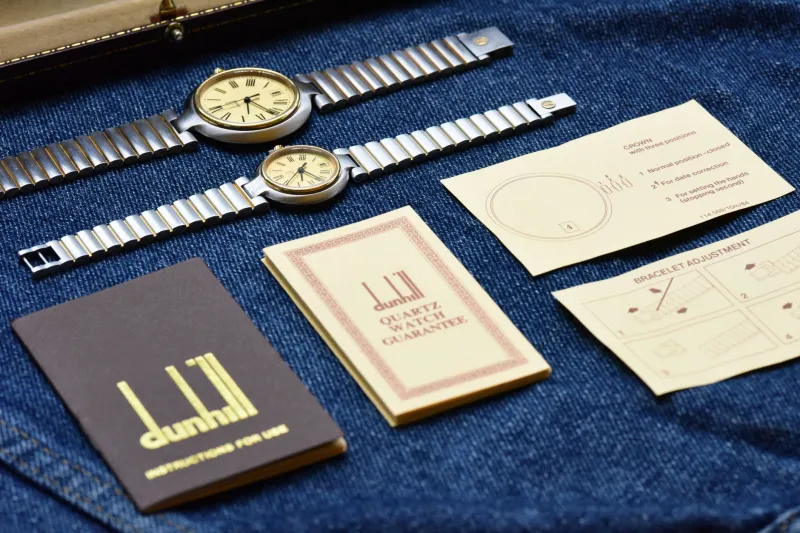
There Was Always a Booklet
You know the one. It came folded inside the box, usually underneath the styrofoam, sometimes sealed in a small plastic bag alongside the warranty card. It was printed in at least three languages, illustrated with diagrams that looked like they were drawn by a very precise engineer, and it covered everything from initial setup to troubleshooting to the proper way to clean the machine. Some of them were twenty pages. Some were two hundred. The VCR manual. The microwave manual. The manual for the riding lawnmower your dad bought in 1987 and still has in the garage.
For most of the twentieth century, the instruction manual was not an afterthought. It was a fundamental part of the product. Companies spent real money writing them, printing them, and including them in every box. And the implicit contract was clear: before you use this thing, you read the booklet.
A Different Relationship with Ownership
What's easy to forget is that this expectation — read before you use — reflected a broader cultural assumption about ownership. When you bought something significant, you were expected to understand it. Not just operate it, but actually know how it worked, what its limits were, and what to do when something went wrong.
This was especially true with tools and appliances. A new circular saw came with a manual that covered blade types, cutting angles, depth adjustments, and safety precautions — and you were expected to work through it before you made your first cut. A new dishwasher came with guidance on water temperature, detergent types, loading configurations, and maintenance cycles. Even a new camera — particularly the 35mm SLR models that were popular in the 1970s and 80s — came with a booklet that walked you through aperture, shutter speed, and film loading, because without that knowledge, you'd waste every roll.
There was a patience built into this process. You didn't expect to be immediately fluent. You expected to spend some time with the material before you were competent. Mastery was a destination, not a starting point.
The Manual as Teacher
For many Americans, the instruction manual was genuinely educational in ways that went beyond the immediate product. Kids who read the manual for their first calculator learned something about mathematical logic. Teenagers who worked through the manual for a shortwave radio learned something about frequencies and signal propagation. Adults who studied the manual for their new woodworking lathe came away understanding tolerances, speeds, and the physics of turning.
The manual assumed you were capable of absorbing technical information, and so it gave you technical information. It treated you as someone who wanted to understand, not just someone who wanted to get going.
There was also something about the physical format that encouraged focus. You sat down with a booklet. You turned pages. You looked at diagrams. You cross-referenced sections. It was a slow, deliberate process — not unlike reading a short book — and it produced a different kind of retention than watching a two-minute video while simultaneously checking your phone.
What Replaced It
The shift started gradually. As consumer electronics became more complex and more global, manuals grew unwieldy — some early home computer manuals ran to several hundred pages — and companies began looking for ways to reduce printing costs and simplify the user experience. Online help systems emerged. FAQs replaced troubleshooting sections. Quick-start guides replaced comprehensive manuals.
Today, the dominant philosophy in product design is what the industry calls intuitive interface — the idea that a well-designed product should be understandable without any instruction at all. Apple popularized this with the original iPhone, which shipped without a manual because Steve Jobs believed the product should explain itself. That was a genuine design achievement. But it also established an expectation that has spread far beyond smartphones: that any product requiring a manual is, by definition, poorly designed.
The result is that we now have a generation of products — appliances, tools, software, vehicles — that are operated primarily by feel, by guessing, or by searching YouTube when something doesn't work. The QR code in the box doesn't go to a comprehensive manual. It goes to a setup video, maybe three minutes long, that covers the basics and assumes you'll figure out the rest.
The Cost of Making Things Easy
There's a real argument that intuitive design is better design. If you can hand someone a product and they can use it well without any instruction, that's a remarkable achievement. Nobody genuinely misses struggling through a poorly written manual at eleven o'clock at night trying to set up a VCR.
But the shift toward self-explanatory products has had a quiet side effect: it has reduced the depth of our relationship with the things we own. When you learned how your microwave actually worked — the magnetron, the rotating field, why metal was dangerous — you understood something real about the world. When you worked through the manual for your new table saw and came to respect its capabilities and its dangers, you became a more careful and more skilled operator.
The modern assumption that everything should be immediately obvious has, in some ways, lowered our tolerance for the learning curve. We expect software to be learnable in minutes. We expect appliances to operate identically to every other appliance. When something requires genuine study, we experience it as a design flaw rather than an opportunity.
The Booklet Knew Something We've Forgotten
The instruction manual, at its best, was an act of respect. It said: this product is complex enough to deserve your attention, and you are capable enough to give it. That combination — a product worth understanding, and a user willing to understand it — produced a kind of competence that felt earned.
Somewhere in your parents' house, or in a box in your own basement, there is probably a manual for something that no longer exists. A bread machine. A camcorder. A dot-matrix printer. Pick it up sometime. Read a few pages. Notice how much it assumed you wanted to know.
That assumption was a form of optimism. And it made for a different kind of owner.