The Doctor Will See You Eventually: How American Families Handled Getting Sick Before Modern Medicine Made It Easy
The Doctor Will See You Eventually: How American Families Handled Getting Sick Before Modern Medicine Made It Easy
Somewhere around the third hour of scrolling WebMD at midnight, it's easy to forget that the ability to instantly look up symptoms, book a same-day telehealth appointment, and pick up a prescription before dinner is an extraordinarily recent development. For most of American history — including the lifetime of anyone's grandparents — getting sick meant something entirely different. Something slower, more uncertain, and in many cases considerably more dangerous.
Let's go back to the 1950s and early 1960s, a period that feels modern in photographs but operated by rules of health and medicine that most Americans today would barely recognize.
The Doctor Came to You — Sometimes
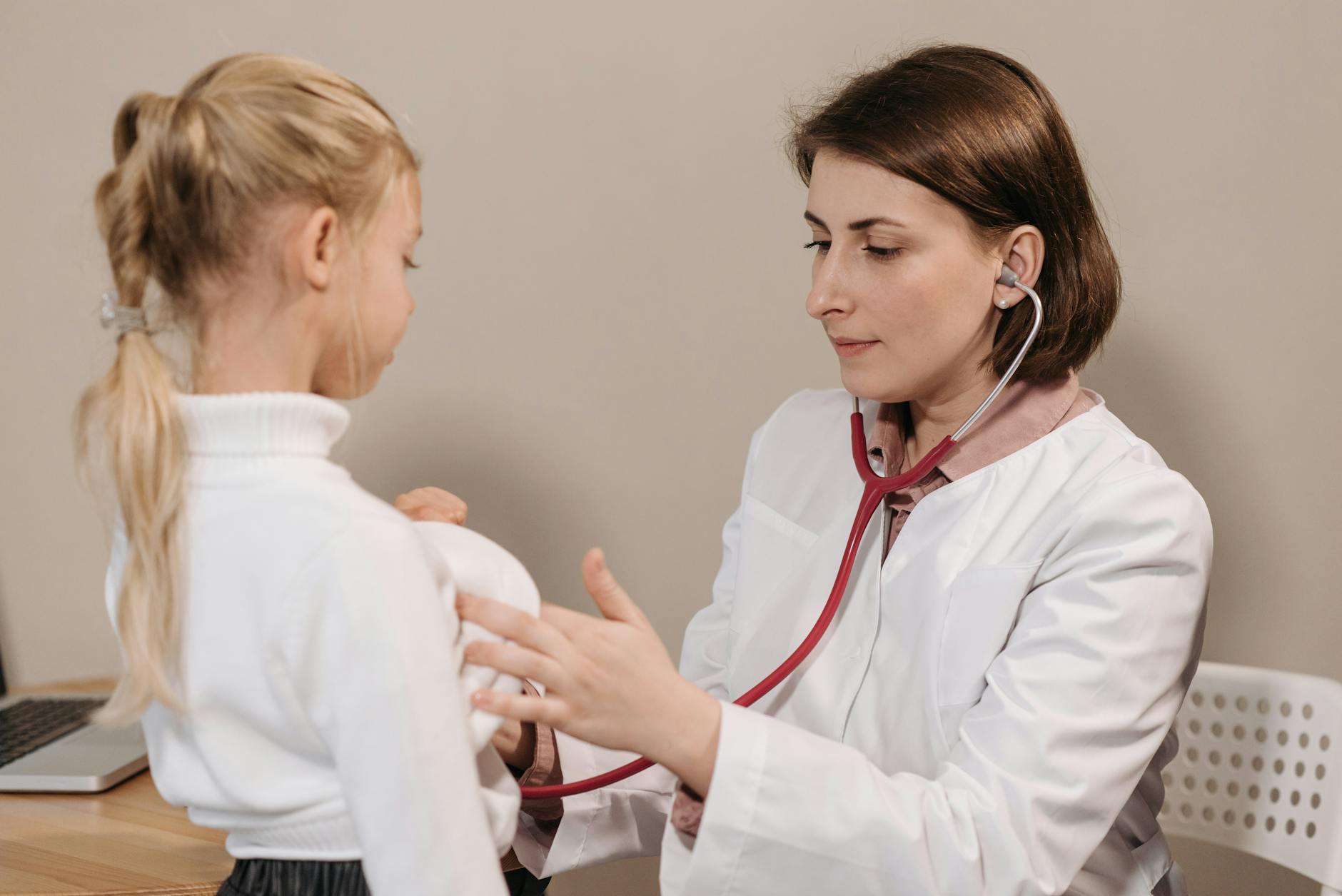
The house call was still a real thing in 1950s America. A family physician might genuinely drive to your home to examine a sick child, check on an elderly patient, or assess something that seemed serious enough to warrant it. This wasn't a luxury reserved for the wealthy. It was simply how medicine often worked in smaller communities where the local doctor knew families by name, knew their histories, and considered personal visits part of the job.
But that intimacy came with significant limitations. Most towns had one doctor, maybe two. Rural areas might have none within a reasonable distance. There were no appointment scheduling apps, no online portals, no automated reminders. You called the office — if the doctor had an office phone — or you went in person and waited. "Walk-in" wasn't a branded concept; it was just what you did. You sat in a waiting room with other sick people, often for hours, and eventually someone saw you.
Specialists existed, but accessing them required a referral, significant travel in many cases, and money that most working families didn't have readily available. For a large portion of the American population in the 1950s, the general practitioner was the beginning and the end of professional medical care.
What Health Insurance Actually Looked Like
Employer-sponsored health insurance began expanding after World War II, but coverage in the 1950s was far from universal and far from comprehensive by modern standards. Medicare and Medicaid didn't exist until 1965. Before that, elderly and low-income Americans had essentially no safety net for medical costs outside of charity care.
For working families with some form of insurance, policies often covered hospitalization but not routine office visits. Prescription drug coverage was minimal or nonexistent. The concept of an "in-network provider" or an "explanation of benefits" document hadn't been invented yet. If you saw a doctor, you paid the bill directly, usually in cash, sometimes on a payment plan the doctor himself arranged with you informally.
A 1958 survey found that roughly half of Americans had no hospital insurance at all. Getting seriously ill wasn't just a health crisis — it was a financial one, often for years afterward.
The Home Remedy Cabinet
Because professional medical care was expensive, inconvenient, or simply unavailable, American families in the 1950s and 60s handled a remarkable range of illnesses at home, with a combination of over-the-counter products, folk remedies passed down through generations, and a working knowledge of what could wait and what couldn't.
A fever in a child might be treated with aspirin — children's aspirin was heavily marketed and widely used, though the link between aspirin and Reye's syndrome in children wasn't understood until the early 1980s. Vicks VapoRub was applied to chests, backs, and sometimes the soles of feet for respiratory congestion. Mustard plasters — a paste of dry mustard spread on cloth and applied to the chest — were still in use in some households. Castor oil was a go-to for digestive complaints. Hydrogen peroxide went on every cut and scrape, regardless of whether it was actually the most effective treatment.
For a sore throat, gargling with warm salt water was standard. For an earache, a few drops of warm olive oil. For a cold that wouldn't quit, chicken soup — and this one, at least, has held up reasonably well to modern scrutiny.
None of this was quackery in the eyes of the people doing it. It was practical management of the everyday, passed from mother to daughter, neighbor to neighbor, across generations that had learned to handle most things without professional intervention because professional intervention wasn't always an option.
The Illnesses Nobody Talks About Anymore
This is perhaps the most striking part of the comparison: the sheer number of diseases that were simply accepted as facts of life in the 1950s that have since been eliminated, controlled, or reduced to near-irrelevance.
Polio paralyzed thousands of American children every year before the Salk vaccine arrived in 1955. Parents kept kids away from public swimming pools in summer. The fear was real and immediate. Measles, mumps, rubella, whooping cough, and chickenpox cycled through schools and neighborhoods as predictable seasonal events. They weren't considered emergencies — they were considered childhood. Most kids got them. Most recovered. Some didn't.
Strep throat, left untreated — and it often was, because the cost and effort of a doctor visit for a sore throat was a genuine barrier — could progress to rheumatic fever and cause permanent heart damage. This happened regularly enough that rheumatic heart disease was a known and common condition among American adults well into the mid-20th century. Today it's rare to the point of being a footnote.
Antibiotic resistance hadn't yet become a public health concern because antibiotics themselves were still relatively new. Penicillin had only become widely available in the late 1940s. The ability to reliably treat a bacterial infection with a simple prescription was, in the 1950s, still genuinely remarkable — a fact that had already been forgotten by the generation that grew up with it.
How Recent "Easy" Healthcare Actually Is
The urgent care clinic — that strip-mall staple where you can walk in with a sinus infection and leave with a prescription in under an hour — didn't become widespread until the 1990s and early 2000s. The ability to Google your symptoms and arrive at a doctor's office already knowing the likely diagnosis is maybe 20 years old. Telehealth at scale is newer than most smartphones.
The version of healthcare that feels completely normal to anyone under 40 — convenient, information-rich, and at least theoretically accessible — is historically speaking a very recent invention. The generation that raised the Baby Boomers navigated illness with aspirin, patience, a trusted family doctor they might see twice a year, and the quiet understanding that some things just had to run their course.
That wasn't ignorance. It was adaptation to the world they had. The world we have now, for all its frustrations and costs and complexity, would have looked like a miracle to them.